Today's
EarthStation1.com 15% Off Commemorative Memorial Title:
Appointment With Destiny: The Crucifixion Of Jesus MP4 Download Or
DVD
Today, April 6, 2026
April 6, 2026: Monday After Easter
Sunday: Religion: The History Of Religion: Abrahamic Religions:
Christianity: Eastertide (Eastertime, Easter Season, Paschaltide,
Paschaltime, Paschal Season): Easter Week (Bright Week, Pascha
Week, Renewal Week): The Octave of Easter: Easter Monday (Bright
Monday, Renewal Monday, Wet Monday, Dyngus Day): -- Easter Monday
is the day when Jesus Christ emerged from the tomb after his
crucifixion. There are different traditions surrounding the Monday
that comes immediately after Easter Day. Although the Bible does
not instruct the observance of this holiday, many Christian groups
- primarily Roman Catholics and Eastern Orthodox - celebrate this
day as a legal holiday and part of their cultural tradition. In
Western Christianity Easter Monday marks the both the second day
Eastertide and of The Octave Of Easter. Eastertide is a festal
season in the liturgical year of Christianity that celebrates the
Resurrection of Jesus Christ. It begins on Easter Sunday, which
initiates both The Octave Of Easter, the first eight days of
Eastertide, and Easter Week, the first seven days of Eastertide.
There are several Eastertide customs across the Christian world,
including flowering the cross, sunrise services, the wearing of
Easter bonnets by women, exclaiming The Paschal Greeting, Clipping
The Church (either the church congregation or local children
holding hands in a ring around the church, inward-facing for
prayers for the congregation or outward-facing ring for prayers
for the wider world) , and decorating Easter Eggs (Paschal Eggs),
decorated eggs which celebrated the resurrection of Jesus a symbol
of the empty tomb. Additional Eastertide traditions include egg
hunting, eating special Easter foods and watching Easter parades.
The Easter Lily, a symbol of the resurrection in Christianity,
traditionally decorates the chancel area of churches on this day
and for the rest of Eastertide. Traditionally lasting 40 days to
commemorate the time the resurrected Jesus remained on earth
before his Ascension, in some western churches Eastertide lasts 50
days to conclude on the day of Pentecost or Whitsunday. Flowering
The cross is a Western Christian tradition practiced at the
arrival of Easter, in which worshippers place flowers on the bare
wooden cross that was used in the Good Friday liturgy, in order to
symbolize the new life that emerges from Jesus's death on Good
Friday". The result is a flowered cross that is set near the
chancel (the space around the altar) for Eastertide. The Paschal
Greeting (The Easter Acclamation, The Easter Day Greeting) is
"Christ Is risen!", and the response is "Indeed He
Is Risen!" or "He Is risen indeed!" with many
variants in English and other languages. Dyngus Day (Polish:
Smigus-Dyngus, "Folk Festival", Lany Poniedzialek, "Wet
Monday"; Hungarian: Locsolkodas, "Sprinkling";
Slovakian Oblievacka, "The Pouring") is held on Easter
Monday across Central Europe, and in small parts of Eastern and
Southern Europe. This Eastertide tradition is widely associated
with Poland in English-speaking countries and is observed by
Polish diaspora communities, particularly among Polish Americans
who call it Dyngus Day. Customs surrounding Smigus-dyngus
celebrate the fertility and coming of spring. The tradition also
exists in Hungary and in Slovakia. On Dyngus Day, Polish families
traditionally visit or call relatives, gifting them Paschal eggs.
Mass is well attended by Christians on Smigus-Dyngus.
Traditionally, boys throw water over girls on Easter Monday.
Additionally, certain scholars trace the custom to Jerusalem, in
which water was used to disperse crowds who were gathering to
discuss the resurrection of Jesus. In some regions, boys tap girls
with pussy willow branches obtained from Palm Sunday church
services in the previous week. This is accompanied by a number of
other rituals, such as making verse declarations and holding
door-to-door processions, in some regions involving boys dressed
as bears or other creatures. The celebration is described in
writing as early as the 15th century. On Sale @ 15% Off Discount
Till Midnight PT!
https://store.earthstation1.com/appointment-with-destiny-the-crucifixion-of-jesus-dvd.html
Today's
EarthStation1.com 15% Off Commemorative Memorial Title:
Washington, D.C. History Video Set DVD, MP4 Download, USB Flash
Drive
Today, April 6, 2026
April 6: National Library Day: -- A
yearly celebration that is part of National Library Week, and
organized by the American Library Association. Throughout the
week, and especially on this day, people come together to
celebrate the crucial roles that libraries and librarians play in
our society. It's also the day to reflect on the importance of
reading and how essential it is to make books accessible and
affordable for every reader. A well-stocked library can introduce
readers to many new worlds, and helps them become more informed
citizens. Libraries are also great community spaces where people
can gather to exchange ideas and learn together. Libraries date
back millennia. The first systematically organized library was
founded in the 7th century B.C. by Assyrian ruler Ashurbanipal in
Nineveh, in contemporary Iraq. It contained approximately 30,000
cuneiform tablets sorted by subject. Since their inception, almost
every great civilization has built libraries. They became great
repositories of knowledge, and a few ancient libraries live on
even today. The goal of these libraries was to collect knowledge
and distribute it for its use in everyday life. Special importance
was given to books on agriculture, architecture, medicine, art,
manufacturing, war, and topics concerning the betterment of life.
As the years went by, people realized the benefits of having
publicly accessible centers of knowledge, and libraries became an
important feature in cities and towns across the world. As the
influence of the Internet grew, many believed that there would no
longer be a need for libraries, but history has proved otherwise,
as libraries continue to flourish and are now more popular than
ever! Not everything can be found on the Internet, and a good
amount of information is still available only on paper, and
despite the convenience of the world wide web, people still like
to physically visit a library and spend time among books and other
readers. On Sale @ 15% Off Discount Till Midnight PT!
https://store.earthstation1.com/washington-dc-history-videos-dvd-mp4-download-usb-driv4.html
Today's
EarthStation1.com 15% Off Commemorative Memorial Title: Timeline
Middle Ages TV Newscast Series + Bonus MP4 Video Download DVD
Today, April 6, 2026
April 6, 1453: The Ottoman Wars In
Europe: The Byzantine-Ottoman Wars: The Fall Of Constantinople
(The Conquest Of Constantinople): -- Mehmed II begins his siege of
Constantinople (Istanbul), which falls on May 29. The Fall of
Constantinople, known to the Turks as the Conquest of Istanbul,
was the capture of the capital of the Byzantine Empire by Mehmed
The Conqueror's invading Ottoman Empire army on 29 May 1453. Then
21 years old, Ottoman Sultan Mehmed the Conqueror defeated an army
commanded by Byzantine Emperor Constantine XI Palaiologos. The
conquest of Constantinople followed a 53-day siege. The capture of
Constantinople marked the end of the Byzantine Empire, a
continuation of the Roman Empire dating to 27 BC, an imperial
state lasting for nearly 1,500 years. The Ottoman conquest of
Constantinople also dealt a massive blow to Christendom, as the
Muslim Ottoman armies thereafter were left unchecked to advance
into Europe without an adversary to their rear. After the
conquest, Sultan Mehmed II transferred the capital of the Ottoman
Empire from Edirne to Constantinople. t was also a watershed
moment in military history. Since ancient times, cities had used
ramparts and city walls to protect themselves from invaders, and
Constantinople's substantial fortifications had been a model
followed by cities throughout the Mediterranean region and Europe.
The Ottomans ultimately prevailed due to the use of formidable
cannons, powered by gunpowder. The conquest of the city of
Constantinople and the end of the Byzantine Empire was a key event
in the Late Middle Ages which also marks, for some historians, the
end of the Middle Ages. On Sale @ 15% Off Discount Till Midnight
PT!
https://store.earthstation1.com/timeline-tv-series-on-the-middle-ages-in-tv-newscast-format-2-dvd-se2.html
Today's
EarthStation1.com 15% Off Commemorative Memorial Title: Napoleon
(1955) Raymond Pellagrin Orson Welles DVD, Download, USB
Today, April 6, 2026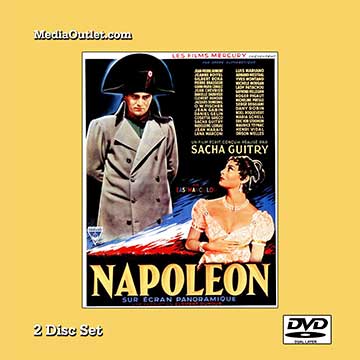
April 6, 1814; The Age Of Enlightenment
(The Enlightenment, The Age Of Reason): The Age Of Revolution: The
Atlantic Revolutions: The French Revolution: The French
Revolutionary And Napoleonic Wars (The Great French War) (The
French Revolutionary Wars, The Napoleonic Wars): The Napoleonic
Wars: The Coalition Wars: The War Of The Sixth Coalition: The
Campaign Of France (The Campaign In North-East France (1814), The
1814 Campaign In North-East France): -- Napoleon Bonaparte's reign
as Emperor Of The French ends when his Marshals decide unanimously
to overrule Napoleon's decision to march The Grande Armee to Paris
to confront the armies of The Sixth Coalition, in order to save
Paris from further destruction; as a result, the victorious
Coalition negotiated the Treaty Of Paris, under which Napoleon was
exiled to the island of Elba, and the borders of France were
returned to where they had been in 1792. The 1814 Campaign In
North-East France was Napoleon's final campaign of the War Of The
Sixth Coalition. Following their victory at Leipzig in 1813, the
Austrian, Prussian, Russian, and other German armies of the Sixth
Coalition invaded France. Despite the disproportionate forces in
favour of the Coalition, Napoleon managed to inflict some defeats,
especially during the Six Days' Campaign. However, the campaign
ended in total defeat for Napoleon as the Coalition kept advancing
towards Paris as Napoleon was out of position to defend the
capital, which capitulated in late March 1814. On Sale @ 15% Off
Discount Till Midnight PT!
https://store.earthstation1.com/napoleon-1955-dvd-raymond-pellagrin-orson-welles-2-19552.html
Today's
EarthStation1.com 15% Off Commemorative Memorial Title: The
American Adventure: TV History Series 1607-1876 DVD MP4 USB Drive
Today, April 6, 2026
April 6, 1846: Slavery: Slavery In The
United States: Landmark Court Decisions In The United States:
Landmark Supreme Court of the United States (SCOTUS) Decisions:
Dred Scott v. Sandford: -- Dred and Harriet Scott file separate
lawsuits for freedom in the St. Louis Circuit Court against Irene
Emerson based on two Missouri statutes. One statute allowed any
person of any color to sue for wrongful enslavement. The other
stated that any person taken to a free territory automatically
became free and could not be re-enslaved upon returning to a slave
state. Neither Dred nor Harriet Scott could read or write and they
needed both logistical and financial support to plead their case.
They received it from their church, abolitionists and an unlikely
source, the Blow family who had once owned them. Since Dred and
Harriet Scott had lived in Illinois and the Wisconsin Territory -
both free domains - they hoped they had a persuasive case. When
they went to trial on June 30, 1847, however, the court ruled
against them on a technicality and the judge granted a retrial.
The Scotts went to trial again in January 1850 and won their
freedom. Irene appealed the case to the Missouri Supreme Court
which combined Dred and Harriet's cases and reversed the lower
court's decision in 1852, making Dred Scott and his family
enslaved again. In November 1853, Scott filed a federal lawsuit
with the United States Circuit Court for the District of Missouri.
By this time, Irene had transferred Scott and his family to her
brother, John Sandford (although it was determined later that she
retained ownership). On May 15, 1854, the federal court heard Dred
Scott v. Sandford and ruled against Scott, holding him and his
family in slavery. In December 1854, Scott appealed his case to
the United States Supreme Court. The trial began on February 11,
1856. By this time, the case had gained notoriety and Scott
received support from many abolitionists, including powerful
politicians and high-profile attorneys. But on March 6, 1857, in
the infamous Dred Scott v. Sandford decision, The Supreme Court Of
The United States ruled that "a negro, whose ancestors were
imported into [the U.S.], and sold as slaves", whether
enslaved or free, could not be an American citizen and therefore
had no standing to sue in federal court, and that the federal
government had no power to regulate slavery in the federal
territories acquired after the creation of the United States. This
decision is unanimously denounced by modern scholars. Many
contemporary lawyers, and most modern legal scholars, consider the
ruling regarding slavery in the territories to be obiter dictum, a
ruling "said in passing", and not a binding precedent.
Bernard Schwartz says it "stands first in any list of the
worst Supreme Court decisions - Chief Justice C.E. Hughes called
it the Court's greatest self-inflicted wound". Junius P.
Rodriguez says it is "universally condemned as the U.S.
Supreme Court's worst decision". Historian David Thomas Konig
says it was "unquestionably, our court's worst decision
ever". The decision immediately spurred vehement dissent from
anti-slavery elements in the North, and proved to be an indirect
catalyst for the American Civil War. It was functionally
superseded by the Civil Rights Act Of 1866 and by the Fourteenth
Amendment to the United States Constitution, adopted in 1868,
which gave African Americans full citizenship. On Sale @ 15% Off
Discount Till Midnight PT!
https://store.earthstation1.com/the-american-adventure-series-us-1st-century-4-dv14.html
Today's
EarthStation1.com 15% Off Commemorative Memorial Title: Wings Over
The World: Aviation History Series + Bonus MP4 Or DVD Set
Today, April 6, 2026
April 6, 1890: #BOTD: #HBD! Anthony
Fokker, Indonesian-born Dutch aviation pioneer, aircraft
manufacturer, pilot, engineer and businessman, founder of the
Fokker Aircraft Company, most famous for the fighter aircraft he
produced in Germany during the First World War such as the
Eindecker monoplanes, the Dr.1 triplane and the D.VII biplane, and
for the first practical forward-firing aircraft-mounted machine
gun, an invention which led directly to the phase of German air
superiority known as the Fokker Scourge (d. December 23, 1939) is
#born Anton Herman Gerard Fokker in Blitar, East Java, Dutch East
Indies (now Indonesia). Anthony Fokker is most famous for the
fighter aircraft he produced in Germany during the First World War
such as the Eindecker monoplanes, the Dr.1 triplane and the D.VII
biplane, and for the first practical forward-firing
aircraft-mounted machine gun. Its use directly led to a phase of
German air superiority known as the Fokker Scourge. After the
Treaty Of Versailles forbade Germany to produce airplanes, Fokker
moved his business to the Netherlands. There his company was
responsible for a variety of successful aircraft including the
Fokker trimotor, a successful passenger aircraft of the inter-war
years. He died in North America in 1939. Anthony Fokker died at
age 49 in New York in 1939 from pneumococcal meningitis, after a
three-week-long illness. In 1940, his ashes were brought to
Westerveld Cemetery in Driehuis, North Holland, where they were
buried in the family grave. On Sale @ 15% Off Discount Till
Midnight PT!
https://store.earthstation1.com/wings-over-the-world-7-dvd-set-entire-aviation-tv-serie7.html
Today's
EarthStation1.com 15% Off Commemorative Memorial Title: The Moving
Picture Boys In The Great War: WWI DVD, Download, USB Drive
Today, April 6, 2026
April 6, 1892: #BOTD: #HBD! Lowell
Thomas, American author, journalist, tv broadcaster, radio
broadcaster and traveler, best remembered for publicizing T. E.
Lawrence as Lawrence of Arabia (August 29, 1981) is #born Lowell
Jackson Thomas in Woodington, Ohio. Lowell Thomas shot dramatic
footage of Lawrence and, after the war, toured the world,
narrating his film "With Allenby in Palestine and Lawrence in
Arabia", and making Lawrence, and himself, household names.
During the 1920s, Thomas was a magazine editor, but he never lost
his fascination with the movies. He narrated Twentieth Century
Fox's Movietone newsreels until 1952. That year, he went into
business with Mike Todd and Merian C. Cooper to exploit Cinerama,
a movie format that used three projectors and an enormous curved
screen with 7-channel surround sound. He produced the first
movie/documentary in Cinerama: This is Cinerama, the third: Seven
Wonders of the World, and the fourth: Search for Paradise in this
format in 1956, with a 1957 release date. Cinerama features were
well-received, but the company discontinued the three-projector
system by 1963, with the enormous costs and technical difficulties
in film production and presentation, in favor of a single-camera
70mm system which lacked the visual impact of true Cinerama. A
quarter-century later, Thomas was still raving about Cinerama in
his memoirs and wondering why someone wasn't trying to revive it.
He hosted the first-ever television news broadcast in 1939 and the
first regularly scheduled television news broadcast (even though
it was just a camera simulcast of his radio broadcast) beginning
on February 21, 1940 over local station W2XBS (now WNBC) New York.
In the summer of 1940, Thomas anchored the first live telecast of
a political convention, the 1940 Republican National Convention
which was fed from Philadelphia to W2XBS and on to W2XB.
Reportedly, Thomas wasn't even in Philadelphia, instead anchoring
the broadcast from a New York studio and merely identifying
speakers who addressed the convention. He presented and commented
upon the news for four decades until his retirement in 1976, the
longest radio career of anyone in his day (a record later
surpassed by Paul Harvey). "No other journalist or world
figure, with the possible exception of Winston Churchill, has
remained in the public spotlight for so long," wrote Norman
R. Bowen in Lowell Thomas: The Stranger Everyone Knows (1968). His
signature sign-on was "Good evening, everybody" and his
sign-off "So long, until tomorrow," phrases that he
would use in titling his two volumes of memoirs. Thomas is also
known for two television programs: High Adventure, a series of
travelogue specials filmed in the late 1950s for CBS; and Lowell
Thomas Remembers, a 1970s PBS series that reviewed major news
events from 1919 through 1975 on a year-by-year basis using
newsreel footage, including some that Thomas originally narrated
for Movietone. He was also involved in promoting the Polaroid
cameras in instructional films. Lowell Thomas died at his home in
Pawling, New York. aged 89. He is buried in Christ Church Cemetery
in Pauling. On Sale @ 15% Off Discount Till Midnight PT!
https://store.earthstation1.com/the-moving-picture-boys-in-the-great-war-dvd.html
Today's
EarthStation1.com 15% Off Commemorative Memorial Title: Millhouse:
A White Comedy (1971) Richard Nixon Farce MP4 Download DVD
Today, April 6, 2026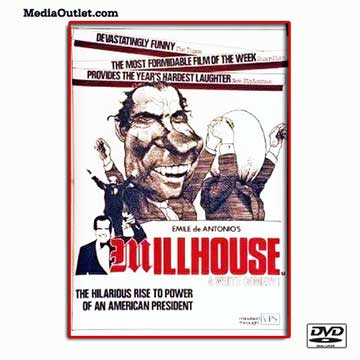
April 6, 1901: #BOTD: #HBD! Jerry
Voorhis, Jerry Voorhis, Democratic politician from California who
served five terms in the United States House Of Representatives
from 1937 to 1947, representing the 12th Congressional district in
Los Angeles County, the first political opponent of Richard Nixon,
who defeated Voorhis for re-election in 1946 in a campaign cited
as an example of Nixon's use of red-baiting during his political
rise (d. September 11, 1984) is #born Horace Jeremiah Voorhis in
Ottawa, Kansas to Charles Brown Voorhis, of Dutch descent, and
Ella Ward (Smith) Voorhis. Jerry Voorhis began school in Ottawa,
but also attended school in Oklahoma City, Peoria, Illinois and
Pontiac, Michigan. He attended the Hotchkiss School, an elite
boys' boarding school in Connecticut with close ties to Yale
University, and subsequently attended Yale, graduating in 1923.
Voorhis was elected as a member of Phi Beta Kappa, was president
of the Christian Association, and was greatly influenced by the
Social Gospel movement, which gave its blessing to Christian
socialism. After graduating, Voorhis engaged a room at a boarding
house and went to work as a receiving clerk, a job he soon
exchanged for one as a freight handler. Later in 1923, he was laid
off. In 1923 and 1924, he served as a traveling representative for
the YMCA in Germany, though his stay was cut short by illness.
Suffering from pneumonia, Voorhis spent six weeks recovering in a
London nursing home. Charles Voorhis's job with Nash had taken him
to a new home in Kenosha, Wisconsin; Jerry Voorhis joined his
parents there on his return from Europe. As part of his recovery
from his illness, he spent several weeks in northwestern Wyoming,
working on a ranch. In Kenosha, he met a social worker named Alice
Louise Livingston, and married her on November 27, 1924, in her
hometown of Washington, Iowa. Resuming his blue-collar career
after his marriage, Voorhis moved to North Carolina with his wife
and went to work in a Ford plant in Charlotte until being offered
work as a teacher in an Illinois school for underprivileged boys,
teaching three grades, coaching sports, and giving religious talks
in the school's chapel each morning. This was followed by a year
in Laramie, Wyoming, where the Voorhises founded and ran an
orphanage for boys. In 1927, the now-retired Charles Voorhis
offered his son an opportunity to found a boys academy near the
elder Voorhis's home in Pasadena, California. Jerry Voorhis
responded by moving to California. In 1928, he founded and became
headmaster of the Voorhis School for Boys in San Dimas,
California, a post he retained after his election to Congress. In
addition to academic tutelage, the Voorhis School's boys received
training in farming, mechanical work, and other manual vocations.
Charles and Jerry Voorhis would put much of the family fortune
into the school. After Voorhis's election to Congress, the school
would be closed down, with the land and buildings donated to
California State Polytechnic University, Pomona (Cal Poly Pomona),
later serving as the university's Southern California campus until
it moved in 1950 to Pomona. Voorhis remained in close touch with
his school's alumni. Voorhis also involved himself in the local
community. He organized cooperatives among the local ranchers and
farmers. When strikes occurred, he would walk the picket lines
with the workers. Voorhis gave lectures at Pomona College from
1930 until 1935. He began publishing articles, writing in 1933,
"We could produce plenty for all, but we don't do it ... we
will do it only when all producing wealth is owned publicly. ...
Incidentally, we would then be living in the kingdom of God."
In the late 1920s and early 1930s, Voorhis was registered to vote
as a Socialist. When he ran for a seat in the California State
Assembly in 1934, he changed his party registration from Socialist
and ran as a Democrat. Voorhis received the backing of the
crusading socialist writer Upton Sinclair, who was the Democratic
gubernatorial candidate, but was defeated by popular incumbent
Herbert Evans. Two years later, in 1936, Voorhis challenged
incumbent John Hoeppel for the Democratic nomination in the 12th
Congressional district. Hoeppel had been weakened by a recent
conviction for attempting to sell a nomination to West Point, and
Voorhis won the Democratic primary, with Hoeppel finishing in
third place. Running as a "Progressive Roosevelt-Democrat",
Voorhis easily defeated Republican nominee Frederick F. Houser in
the general election. Voorhis was reelected to Congress four times
and had one of Congress's most liberal voting records. He
supported New Deal initiatives, including Franklin Roosevelt's
controversial court packing plan. In the run-up to World War II,
Voorhis urged neutrality. He proposed enactment of a law which
would require a national referendum on whether to go to war. In
September 1939, when interviewed by The New York Times for his
reaction to the President calling Congress into special session to
consider amendments to the Neutrality Act, Voorhis stated that a
special session should quickly increase relief to the working
poor. In early November 1939, however, Voorhis announced his
support for repealing the arms embargo mandated by the Act, at the
same time urging that the country remain neutral. Voorhis also
opposed a peacetime draft, and supported "lend-lease"
legislation. Once war was declared, Voorhis supported the
internment of Japanese-Americans, though he suggested that the
evacuations be done in as voluntary a manner as possible and that
officials be appointed to administer their property to avoid
forced sales at bargain prices. Voorhis "temperamentally and
philosophically loathed" communism. He sponsored the Voorhis
Act of 1940, which required political organizations which were
controlled by a foreign power or which engaged in military
activities to subvert the American government to register with the
Justice Department. Voorhis also served as a member of the House
Un-American Activities Committee (HUAC) though Time magazine
stated he could be "counted upon ... to temper rightist
blasts for leftist lambs". Voorhis was generally highly
regarded by his colleagues and others in Washington. Senator Paul
Douglas of Illinois considered Voorhis "a political saint".
As Voorhis served his fifth term in the House, local Republicans
searched for a candidate capable of defeating him. Richard Nixon
answered the call. Nixon, who was still in the Navy when
approached, wrote of Voorhis, "His 'conservative' reputation
must be blasted. But my main efforts are being directed toward
building up a positive, progressive group of speeches that tell
what we want to do, not what the Democrats have failed to do ...
I'm really hopped up over this deal, and I believe we can win."
Voorhis had the advantage of incumbency, but this was balanced by
other factors favoring Nixon. Due to the pressure of Congressional
business, Voorhis was able to devote only two months to the
campaign, while Nixon campaigned in the district for ten months.
Voorhis's time was further limited when, while en route to
California from Washington D.C. in August, he was forced to have
surgery for hemorrhoids in Ogden, Utah. He spent two weeks in an
Ogden hotel recuperating from the operation. Nixon alleged that a
vote against Voorhis was "a vote against the P.A.C. Political
Action Committee, affiliated with the Congress of Industrial
Organizations (CIO), its Communist principles, and its gigantic
slush fund." The Nixon campaign distributed 25,000 thimbles
labeled "Nixon for Congress/Put the needle in the P.A.C."
Voorhis's supposed involvement with and endorsement by the
CIO-PAC, which was believed to be a Communist front organization,
was a major issue in the campaign. Nixon defeated Voorhis by over
15,000 votes, and Time magazine praised the future president for
"politely avoid[ing] personal attacks on his opponent".
The day after the election, Voorhis issued a concession statement,
"I have given the best years of my life to serving this
district in Congress. By the will of the people, that work is
ended. I have no regrets about the record I have written." In
his 1947 book, Confessions of a Congressman, Voorhis attributed
his defeat to tremendous amounts of money supposedly spent by the
Nixon forces. When Nixon read the book, he commented, "What I
am wondering is where all the money went that we were supposed to
have had!" Nixon's defeat of Voorhis has been cited as the
start of a number of red-baiting campaigns by the future president
that later elevated him to the Senate and the vice presidency, and
eventually put him in position to run for president. In spite of
any hard feelings, Voorhis sent Nixon a letter of congratulations
in early December 1946. The two men met for an hour at Voorhis's
office and parted as friends, according to Voorhis. After leaving
office, Voorhis remained in his Alexandria, Virginia, house,
completing his book, Confessions of a Congressman. In early 1947,
he was offered the job of executive director of the Cooperative
League of the USA. The League expanded its purview, founding the
Group Health Association of America and the National Association
of Housing Cooperatives. In 1954, the former congressman led the
U.S. delegation to the International Cooperative Alliance congress
in Paris, successfully opposing Soviet plans to give greater
representation to Eastern European countries, which was seen as a
means of eventual communist control of the organization. Voorhis
occasionally testified before Congressional committees, usually in
opposition to bills which would tax cooperatives. Five days after
Nixon's defeat in the 1962 California gubernatorial election,
Voorhis appeared on TV as a Nixon detractor, with Murray Chotiner
and Republican Michigan Congressman Gerald Ford defending the
former vice-president on Howard K. Smith's ABC News and Comment
program, "The Political Obituary of Richard M. Nixon".
Voorhis complained about the way Nixon had conducted himself in
the 1946 race. but was overshadowed by fellow detractor and Nixon
nemesis Alger Hiss. Hiss's participation led to such an uproar
that sponsors pulled back from underwriting the program, and News
and Comment left the air in the spring of 1963. Having spent 23
years in Winnetka, Voorhis moved back with his wife to the old
12th district to an apartment in Claremont. After almost a quarter
century of silence on his defeat by Nixon, he wrote The Strange
Case of Richard Milhous Nixon, a book in which he stated that
Nixon was "quite a ruthless opponent" whose "one
cardinal and unbreakable rule of conduct" was "to win,
whatever it takes to do it". "I did not expect my
loyalty to America's constitutional government to be attacked,"
he wrote. As the Nixon presidency slowly collapsed, Voorhis spoke
out more frequently. In 1972, he said, "Sour grapes to
criticize the man who beat me, but I just wouldn't be human if I
said I liked spending the second half of my life as 'the man who
Nixon beat'". After Nixon resigned as President, Voorhis
noted, "Here is the philosophy of doing-anything-to-win
receiving its just and proper reward." Voorhis, believing he
had been labeled a subversive by Nixon, "took some
satisfaction" in stating that Nixon himself had been the
subversive, seeking, according to Voorhis, to impose "a
virtual dictatorship" on the country. In 1972, Voorhis and
his wife entered a retirement home in Claremont. Nonetheless, he
continued to work on a number of committees and advisory boards.
His activities ranged from the California Commission on Aging
(appointed by Governor Jerry Brown) to working as a teacher's aide
to Tom Hayden's Campaign for Economic Democracy. His papers are
held by The Claremont Colleges Library Special Collections. An
elementary school in El Monte, California, is named for the former
congressman. Cal Poly Pomona considers Voorhis one of its founders
and has named a park and an ecological reserve for him. Jerry
Voorhis died aged 83 of emphysema at a retirement home in
Claremont, California where he had been living with his wife Alice
Louise Livingston. In addition to his widow, he left two sons and
a daughter. Fellow Nixon opponent and former California governor
Pat Brown eulogized him, saying, "He was a great man. Not
many like him these days." Voorhis is buried in Mountain View
Cemetery in Altadena, California. On Sale @ 15% Off Discount Till
Midnight PT!
https://store.earthstation1.com/millhouse-a-white-comedy-dvd-1971-richard-nixon-documen1971.html
Today's
EarthStation1.com 15% Off Commemorative Memorial Title: America
Goes Over - The Yanks Are Coming! WWI DVD, Download, USB Drive
Today, April 6, 2026
April 6, 1917: The European Civil War:
World War I: The First European War (The European Theater Of World
War I): The Western Front Of World War I: American Entry Into
World War I: The 1917 United States Declaration Of War On Germany:
(The United States Declaration Of War Onn Germany (1917)): -- Four
days after President Woodrow Wilson's April 2 address to a joint
session of Congress to ask for a declaration of war on Germany,
saying "the world must be made safe for democracy", and
two days after the U.S. Senate's April 4 passing of the resolution
in an 82 to 6 vote, the resolution passes the U.S. House at 3 a.m.
April 6 by a vote of 373-50. Immediately after the resolution was
passed by the House, it was signed by House Speaker, Champ Clark.
About nine hours later, at 12:14 p.m., it was signed by Vice
President Thomas R. Marshall. Less than an hour after that, when
President Wilson signed it at 1:11 p.m., the United States was
officially at war against the German Empire, and thereby, the U.S.
entered World War I in Europe.. The declaration read: "WHEREAS,
The Imperial German Government has committed repeated acts of war
against the people of the United States of America; therefore, be
it resolved by the Senate and House of Representatives of the
United States of America in Congress assembled, That the state of
war between the United States and the Imperial German Government,
which has thus been thrust upon the United States, is hereby
formally declared; and that the President be, and he is hereby,
authorized and directed to employ the entire naval and military
forces of the United States and the resources of the Government to
carry on war against the Imperial German Government; and to bring
the conflict to a successful termination all the resources of the
country are hereby pledged by the Congress of the United States."
On Sale @ 15% Off Discount Till Midnight PT!
https://store.earthstation1.com/america-goes-over--the-yanks-are-coming-wwi-propaganda-dvd.html
Today's
EarthStation1.com 15% Off Commemorative Memorial Title: Mahatma
Mohandas Gandhi Documentaries DVD MP4 Download USB Drive
Today, April 6, 2026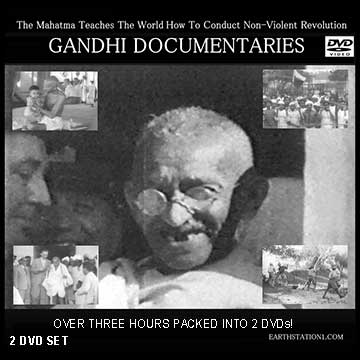
April 6, 1919: India: The History Of
India: The British Raj (Crown Rule In India, Direct Rule In India,
India, The Indian Empire): Nonviolent Resistance (Nonviolent
Action): Satyagraha (Sanskrit: Satya, "Truth"; Agraha,
"Insistence", "Holding Firmly To"); "Holding
Firmly To Truth", "Truth Force"): Civil
Disobedience: The Rowlatt Act: The April 6, 1919 General Strike:
-- Mahatma Mohandas Gandhi orders a general strike in response to
The Rowlatt Act, a legislative act passed by the Imperial
Legislative Council in Delhi on March 18, 1919 that indefinitely
extended the use of preventive indefinite detention. . In February
1919, Gandhi cautioned the Viceroy of India with a cable
communication that if the British were to pass The Rowlatt Act ,
he would appeal to Indians to start civil disobedience. The
British government ignored him, and passed the law stating it
"will not yield to threats". Satyagraha, a form of civil
disobedience formulated by Gandhi, soon followed, with people
assembling to protest the Rowlatt Act. On March 30, 1919, British
law officers opened fire on an assembly of unarmed people,
peacefully gathered, participating in satyagraha in Delhi, and the
people rioted in retaliation. On April 6, 1919, the Hindu festival
day of Yamuna Chhath, Gandhi called the gerneral strike, and he
asked a crowd to remember not to injure or kill British people,
but express their frustration with peace, to boycott British goods
and burn any British clothing they own. He emphasised the use of
non-violence to the British and towards each other, even if the
other side uses violence. Communities across India announced plans
to gather in greater numbers to protest. Government warned him to
not enter Delhi. Gandhi defied the order. On April 9, Gandhi was
arrested, and the people rioted. On April 13, 1919, people
including women with children gathered in an Amritsar park, and a
British officer named Reginald Dyer surrounded them and ordered
his troops to fire on them. The resulting Jallianwala Bagh
massacre (or Amritsar massacre) of hundreds of Sikh and Hindu
civilians enraged the subcontinent, but was cheered by some
Britons and parts of the British media as an appropriate response.
Gandhi in Ahmedabad, on the day after the massacre in Amritsar,
did not criticise the British and instead criticised his fellow
countrymen for not exclusively using love to deal with the hate of
the British government. Gandhi demanded that people stop all
violence, stop all property destruction, and went on fast-to-death
to pressure Indians to stop their rioting. The massacre and
Gandhi's non-violent response to it moved many, but also made some
Sikhs and Hindus upset that Dyer was getting away with murder.
Investigation committees were formed by the British, which Gandhi
asked Indians to boycott. The unfolding events, the massacre and
the British response, led Gandhi to the belief that Indians will
never get a fair equal treatment under British rulers, and he
shifted his attention to Swaraj or self rule and political
independence for India. On Sale @ 15% Off Discount Till Midnight
PT!
https://store.earthstation1.com/mahatma-mohandas-gandhi-nonviolent-revolution-biography-dvd.html
Today's
EarthStation1.com 15% Off Commemorative Memorial Title: The
Dictators: The Rise Of Fascism DVD, Video Download, USB Drive
Today, April 6, 2026
April 6, 1924: Italy: The History Of
Italy: The History Of Fascist Italy:(Fascist Italy 1922-1943):
General Elections In Italy (Italian General Elections): The 1924
Italian General Election: -- The last multi-party election in
Italy until 1946, an election which ultimately brought the facists
to power and ended democracy in Italy, is held under the Acerbo
Law, which stated that the party with the largest share of the
votes would automatically receive two-thirds of the seats in
Parliament as long as they received over 25% of the vote. The
National List, a Fascist and nationalist coalition led by the
National Fascist Party leader and Prime Minister of Italy Benito
Mussolini, a coalition of Catholics, liberals and conservatives
established especially for this election, used violent
intimidation tactics against their opposition which resulted in a
landslide victory and a subsequent two-thirds majority. The
assassination of the socialist deputy Giacomo Matteotti, who had
requested in the Italian Parliament that the results of this be
annulled because the Fascists committed fraud and used violence
used to gain votes, and was kidnapped and killed by Fascists
eleven days later for saying so, provoked a momentary crisis in
the Mussolini government. Mussolini ordered a cover-up, but
witnesses saw the car that transported Matteotti's body parked
outside Matteotti's residence, which linked Amerigo Dumini, an
American-born Italian fascist hitman who led the group responsible
for Matteotti's assassination, to the murder. Mussolini later
confessed that a few resolute men could have altered public
opinion and started a coup that would have swept fascism away.
Dumini was imprisoned for two years. On his release, Dumini
allegedly told other people that Mussolini was responsible, for
which he served further prison time. The opposition parties
responded weakly or were generally unresponsive. Many of the
socialists, liberals, and moderates initiated a boycott of
Parliament which became known as the Aventine Secession (20th
century), in the vain expectation that this would force Victor
Emmanuel to dismiss Mussolini as Prime Minister; instead, this act
of protest heralded the assumption of total power by Benito
Mussolini and his National Fascist Party and the establishment of
a one-party dictatorship in Italy. On December 31, 1924,
Blackshirt consuls had met with Mussolini and gave him an
ultimatum: crush the opposition or they would do so without him.
Fearing a revolt by his own militants, Mussolini decided to drop
all pretense of democracy. On January 3, 1925, Mussolini, who had
pretended his regime was a democracy since he became Prime
Minister of Italy in 1922, began the process of dismantling
virtually all constitutional and conventional restraints on his
power when when he made a belligerent speech before the Italian
Chamber of Deputies, the lower house of the bicameral Parliament
of Italy (the other being the Senate of the Republic),a truculent
speech wherein he took full responsibility for the violence the
Blackshirts used to hand him and his National Fascist Party
victory in the 1924 Italian General Election (though he did not
mention the assassination of Matteotti), and announced he was
taking dictatorial powers over Italy, ushering in the Italian
fascist police state. Ultimately, in response to the Blackshirt's
ultimatum to Mussolini to crush the fascist opposition, Mussolini
abolished the Blackshirts in 1927. On Sale @ 15% Off Discount Till
Midnight PT!
https://store.earthstation1.com/the-dictators-the-rise-to-fascism-dvd-hitler-mussolini-wwii.html
Today's
EarthStation1.com 15% Off Commemorative Memorial Title:
Understanding Northern Ireland: The Historical Evidence MP4 Or DVD
Today, April 6, 2026
April 6, 1926: #BOTD: Ian Paisley,
Northern Irish evangelical Protestant pastor of the Free
Presbyterian Church, loyalist politician and religious leader of
Northern Ireland, leader of the Democratic Unionist Party (DUP)
from 1971 to 2008, 2nd First Minister of Northern Ireland from
2007 to 2008 (d. September 12, 2014) is #born Ian Richard Kyle
Paisley in Armagh, a county town and city in County Armagh,
Northern Ireland, and brought up in the town of Ballymena, County
Antrim. Ian Richard Kyle Paisley, Baron Bannside, PC (Privy
Council) was the son of James Kyle Paisley, an Independent Baptist
pastor who had previously served in the Ulster Volunteers, an
Irish loyalist paramilitary organisation founded in 1912 to block
domestic self-government ("Home Rule") for Ireland,
under Edward Carson, the unionist politician, barrister and judge
who was the Attorney General and Solicitor General for England,
Wales and Ireland as well as the First Lord of the Admiralty for
the Royal Navy. Ian's mother was Scottish. Paisley saw himself
primarily as an Ulsterman, who though despite his hostility
towards Irish republicanism and the Republic of Ireland also saw
himself as an Irishman, saying that "you cannot be an
Ulsterman without being an Irishman". Paisley became a
Protestant evangelical minister in 1946 and remained one for the
rest of his life. In 1951 he co-founded the Reformed
fundamentalist Free Presbyterian Church of Ulster and was its
leader until 2008. Paisley became known for his fiery sermons and
regularly preached anti-Catholicism, anti-ecumenism and against
homosexuality. He gained a large group of followers who were
referred to as Paisleyites. Paisley became involved in Ulster
unionist/loyalist politics in the late 1950s. In the mid-late
1960s he led and instigated loyalist opposition to the Catholic
Civil Rights movement in Northern Ireland. This contributed to the
outbreak of The Troubles in the late 1960s, a conflict that would
engulf Northern Ireland for the next 30 years. In 1970 he became
Member of Parliament (MP) for North Antrim and the following year
he founded the Democratic Unionist Party (DUP), which he would
lead for almost 40 years. In 1979 he became a member of the
European Parliament. Throughout the Troubles, Paisley was seen as
a firebrand and the face of hardline unionism. He opposed all
attempts to resolve the conflict through power-sharing between
unionists and Irish nationalists/republicans, and all attempts to
involve The Republic Of Ireland in Northern Irish affairs. His
efforts helped bring down The Sunningdale Agreement -- an attempt
to establish The Northern Ireland Executive (January 1 - May 28,
1974), the power-sharing devolved government of Northern Ireland,
and a cross-border Council Of Ireland in 1974 made up of 30
members from Dail Eireann and 30 members from the Northern Ireland
Assembly that was to have "advisory and review functions".
He also opposed the Anglo-Irish Agreement of 1985, with less
success. His attempts to create The Third Force, the name given to
a number of attempts by Paisley and the DUP to create an Ulster
loyalist 'defensive militia'a paramilitary movement, culminated in
the creation by the DUP of The Ulster Resistance (UR) (The Ulster
Resistance Movement [URM]) in November 1986 in opposition to the
Anglo-Irish Agreement. Paisley and his party also opposed The
Northern Ireland Peace Process which included the events leading
up to the 1994 Provisional Irish Republican Army (IRA) ceasefire,
the end of most of the violence of The Troubles, and The Good
Friday Agreement of 1998, a pair of agreements signed on April 10
(Good Friday), 1998 that ended most of the violence of the
Troubles. In 2005 Paisley's DUP became the largest unionist party
in Northern Ireland, displacing the Ulster Unionist Party (UUP),
which had dominated unionist politics since 1905 and had been an
instrumental party in the Good Friday Agreement. From October 11
to 13, 2006, agreement resulted from multi-party talks held in St
Andrews in Fife, Scotland between the British and Irish
governments and Northern Ireland's political parties in relation
to the devolution of power in the region that became known as The
St Andrews Agreement. As a result of The St Andrews Agreement, the
DUP finally agreed in 2007 to share power with republican party
Sinn Fein. Thereafter, Paisley and Sinn Fein's Martin McGuinness
became First Minister and Deputy First Minister, respectively, in
May 2007. He stepped down as first minister and DUP leader in
mid-2008, and was made a life peer as Baron Bannside in 2010.
Paisley left politics in 2011. Ian Paisley died of a heart attack
in Belfast, the capital city of Northern Ireland, aged 88. His
body was buried on September 15 at Ballygowan (from Irish Baile
Mhic Gabhann, "McGowan's Townland'), a village in County Down
in the North of Northern Ireland, following a private funeral. An
obituary in The New York Times reported that late in life Paisley
had moderated and softened his stances against Roman Catholics but
that, "the legacies of fighting and religious hatreds
remained." There was a public memorial on October 19 for 830
invited guests held in the Ulster Hall, a Belfast concert hall and
grade A listed building which hosts concerts, classical recitals,
craft fairs and political party conferences such as the large
private rally Paisley and DUP members Peter Robinson and Ivan
Foster held on November 10, 1986 to announce the formation of the
Ulster Resistance Movement (URM), a loyalist paramilitary
organisation whose purpose was to "take direct action as and
when required" to defeat republicanism and bring down The
Anglo-Irish Agreement that had set out conditions for the creation
of a power-sharing government for Northern Ireland and gave the
Irish government an advisory role on political, legal and security
matters in Northern Ireland. On Sale @ 15% Off Discount Till
Midnight PT!
https://store.earthstation1.com/understanding-northern-ireland-the-historical-evidence-mp4-or-dvd.html
Today's
EarthStation1.com 15% Off Commemorative Memorial Title: Huey Long
Aka The Kingfish Documentaries DVD, Download, USB Drive
Today, April 6, 2026
April 6, 1929: The United States: The
History Of The United States: Louisiana: The History Of Louisiana:
The History Of American Politics: The History Of Louisiana
Politics: Governors Of Louisiana: The Louisiana Governorship Of
Huey Long (1928-1932): The 1929 Session Of The Louisiana State
Legislature: The History Of Taxation In The United States: Tax
Resistance In The United States: Huey Long's Five-Cents Per Barrel
Oil Tax Proposal: The 1929 Impeachment Of Huey Long: -- Huey P.
Long, Governor of Louisiana, is impeached by the Louisiana House
of Representatives. In 1929, Long called a special session of both
houses of the legislature to enact a new five-cent per barrel
"occupational license tax" on production of refined oil,
to help fund his social programs. The bill met with fierce
opposition from the state's oil interests. Opponents in the
legislature, led by freshman lawmakers Cecil Morgan of Shreveport
and Ralph Norman Bauer of Franklin in St. Mary Parish, moved to
impeach Long on charges ranging from blasphemy to abuses of power,
bribery, and the misuse of state funds. Long tried to cut the
session short, but after an infamous brawl that spilled across the
State Legislature on what was known as "Bloody Monday,"
the Legislature voted to remain in session and proceed with the
impeachment. In his autobiography, Long indicates that he and his
friends "were outraged at the persistence with which the big
oil companies [which he called the Oil Trust] resisted the payment
of taxes and with the political opposition they continued to give
us.". Long took his case to the people using his
characteristic speaking tours. The New Orleans Times-Picayune,
once the official organ of the Louisiana Lottery, was leading the
fight editorially against Long's proposed tax on oil. Long
discovered that the petroleum companies had increased their
advertising dollars in the newspaper. And he found that the
attorney Arthur Hammond, a brother-in-law of The Times-Picayune's
principal lawyer, was drawing 400 USD per month on two separate
state payrolls. Quickly Hammond was removed from both positions.
Long argued that Standard Oil, the corporate interests, and the
conservative political opposition were conspiring to stop him from
providing roads, books, and other programs to develop the state
and to assist the poor and downtrodden. The House referred many
charges to the Senate. Conviction required a two-thirds majority
of the Senate, but Long produced a "Round Robin"
statement signed by fifteen senators pledging to vote "not
guilty" regardless of the evidence. These senators claimed
that the trial was illegal, and even if proved, the charges did
not warrant impeachment. The impeachment process, now futile, was
suspended. It has been alleged that both sides used bribes to buy
votes, and that Long later rewarded the Round Robin signers with
state jobs or other favors. Following the failed impeachment
attempt in the Senate, Long became ruthless when dealing with his
enemies. He fired their relatives from state jobs and supported
candidates to defeat them in elections. After impeachment, Long
appeared to have concluded that extra-legal means would be needed
to defend the interests of the common people against the powerful
money interests. "I used to try to get things done by saying
'please'," said Long. "Now... I dynamite 'em out of my
path." Since the state's newspapers were financed by the
opposition, in March 1930 Long founded his own paper, the
Louisiana Progress, which he used to broadcast achievements and
denounce his enemies. To receive lucrative state contracts,
companies were first expected to buy advertisements in Long's
newspaper. Long attempted to pass laws placing a surtax on
newspapers and forbidding the publishing of "slanderous
material," but these efforts were defeated. After the
impeachment attempt, Long received death threats. Fearing for his
personal safety, he surrounded himself with armed bodyguards at
all times. On Sale @ 15% Off Discount Till Midnight PT!
https://store.earthstation1.com/huey-long-dvd-3939the-kingfish3939-docum39393939.html
Today's
EarthStation1.com 15% Off Commemorative Memorial Title: Legacy
With Michael Wood World History TV Series DVD, MP4, USB Stick
Today, April 6, 2026
April 6, 1930: India: The History Of
India: The British Raj (Crown Rule In India, Direct Rule In India,
India, The Indian Empire): The Indian Independence Movement:
Direct Action: Nonviolent Resistance (Nonviolent Action):
Satyagraha (Sanskrit: Satya, "Truth"; Agraha,
"Insistence", "Holding Firmly To"); "Holding
Firmly To Truth", "Truth Force"): Civil
Disobedience: Tax Resistance: The Salt March (The Salt Satyagraha,
The Dandi March, The Dandi Satyagraha): -- At the end of the Salt
March, Mahatma Gandhi raises a lump of mud and salt and declares,
"With this, I am shaking the foundations of the British
Empire.". On March 12, Gandhi led a 240+ mile march, known as
the Salt March, to the sea in defiance of British opposition, to
protest the British monopoly on salt. The Salt March, also known
as the Dandi March and the Dandi Satyagraha, was an act of
nonviolent civil disobedience in colonial India led by Mohandas
Karamchand Gandhi to produce salt from the seawater in the coastal
village of Dandi (now in Gujarat), as was the practice of the
local populace until British officials introduced taxation on salt
production, deemed their sea-salt reclamation activities illegal,
and then repeatedly used force to stop it. The 24-day march began
from 12 March 1930 and continued until 6 April 1930 as a direct
action campaign of tax resistance and nonviolent protest against
the British salt monopoly, and it gained worldwide attention which
gave impetus to the Indian independence movement and started the
nationwide Civil Disobedience Movement. Mahatma Gandhi started
this march with 78 of his trusted volunteers. The march was over
240 miles. They walked for 24 days 10 miles a day. On Sale @ 15%
Off Discount Till Midnight PT!
https://store.earthstation1.com/legacy-with-michael-wood-world-history-tv-series-dvd-mp4-us4.html
Today's
EarthStation1.com 15% Off Commemorative Memorial Title: The
Historical View A Legacy In Pictures JPG Image Set CD Download USB
Today, April 6, 2026
April 6, 1931: The American Civil Rights
Movement: Anti-Black Racism In The United States: The Scottsboro
Boys: -- The Scottsboro Boys: The Scottsboro Boys Trials begin in
Scottboro, Alabama before Judge A. E. Hawkins against nine African
American teenagers, ages 13 to 19, accused of raping two White
American women on a train. On March 25, 1931, they were arrested
in Alabama and charged with rape. The landmark set of legal cases
from this incident dealt with racism and the right to a fair
trial. The cases included a lynch mob before the suspects had been
indicted, all-white juries, rushed trials, and disruptive mobs. It
is commonly cited as an example of a miscarriage of justice in the
United States legal system. On March 25, 1931, two dozen people
were 'hoboing' on a freight train traveling between Chattanooga
and Memphis, Tennessee, the hoboes being an equal mix of African
Americans and Caucasians. A group of white teenage boys saw
18-year-old Haywood Patterson on the train and attempted to push
him off the train, claiming that it was "a white man's
train". A group of whites gathered rocks and attempted to
force all of the black men from the train. Patterson and the other
black passengers were able to ward off the group. The humiliated
white teenagers jumped or were forced off the train and reported
to the city's sheriff that they had been attacked by a group of
black teenagers. The sheriff deputized a posse comitatus, stopped
and searched the train at Paint Rock, Alabama and arrested the
black Americans. Two young white women also got off the train and
accused the black teenagers of rape. The case was first heard in
Scottsboro, Alabama, in three rushed trials, in which the
defendants received poor legal representation. All but 12-year-old
Roy Wright were convicted of rape and sentenced to death, the
common sentence in Alabama at the time for black men convicted of
raping white women, even though there was medical evidence to
suggest that they had not committed the crime. With help from the
Communist Party USA (CPUSA) and the NAACP, the case was appealed.
The Alabama Supreme Court affirmed seven of the eight convictions,
and granted 13-year-old Eugene Williams a new trial because he was
a minor. Chief Justice John C. Anderson dissented, ruling that the
defendants had been denied an impartial jury, fair trial, fair
sentencing, and effective counsel. While waiting for their trials,
eight of the nine defendants were held in Kilby Prison. The cases
were twice appealed to the United States Supreme Court, which led
to landmark decisions on the conduct of trials. In Powell v.
Alabama (1932), it ordered new trials. The case was first returned
to the lower court and the judge allowed a change of venue, moving
the retrials to Decatur, Alabama. Judge Horton was appointed.
During the retrials, one of the alleged victims admitted to
fabricating the rape story and asserted that none of the
Scottsboro Boys touched either of the white women. The jury found
the defendants guilty, but the judge set aside the verdict and
granted a new trial. The judge was replaced and the case tried
under a judge who ruled frequently against the defense. For the
third time a jury, now with one African American member, returned
a guilty verdict. The case was sent to the US Supreme Court on
appeal. It ruled that African Americans had to be included on
juries, and ordered retrials. Charges were finally dropped for
four of the nine defendants. Sentences for the rest ranged from 75
years to death. All but two served prison sentences; all were
released or escaped by 1946. One was shot while being escorted to
prison by a Sheriff's Deputy and permanently disabled. Two
escaped, were later charged with other crimes, convicted, and sent
back to prison. Clarence Norris, the oldest defendant and the only
one sentenced to death in the final trial, "jumped parole"
in 1946 and went into hiding. He was found in 1976 and pardoned by
Governor George Wallace, by which time the case had been
thoroughly analyzed and shown to be an injustice. Norris later
wrote a book about his experiences. The last surviving defendant
died in 1989. "The Scottsboro Boys", as they became
known, were defended by many in the North and attacked by many in
the South. The case is now widely considered a miscarriage of
justice, highlighted by use of all-white juries. Black Americans
in Alabama had been disenfranchised since the late 19th century
and were likewise not allowed on juries. The case has been
explored in many works of literature, music, theatre, film and
television. On July 24, 1937: Alabama drops rape charges against
the Scottsboro Boys; on November 21, 2013, Alabama's parole board
voted to grant posthumous pardons to the three Scottsboro Boys who
had not been pardoned or had their convictions overturned. On Sale
@ 15% Off Discount Till Midnight PT!
https://store.earthstation1.com/the-historical-view-a-legacy-in-pictures-jpg-photo-cd.html
Today's
EarthStation1.com 15% Off Commemorative Memorial Title: Columbia
Revolt: University Protests Of 1968 DVD, Download, USB Drive
Today, April 6, 2026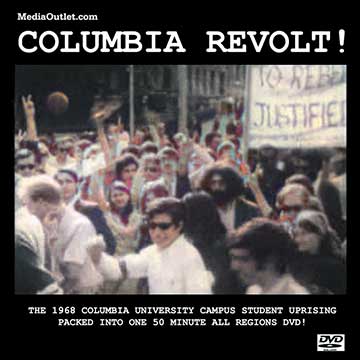
April 6, 1951: #BOTD: #HBD! Phil Schaap,
American jazz disc jockey, historian, archivist and producer,
proprietor of the Phil Schaap Jazz Shop, the most knowledgeable
accomplished historian of Jazz who ever lived (d. September 7,
2021) is #born Philip van Noorden Schaap in the borough of Queens,
New York, the most linguistically and ethnically diverse place on
Earth; the name of neigborhood in Queens he was born in appears to
have been assiduously avoided in online biographies about him.
Despite this, he is known to have been raised in the Hollis
neighborhood of Queens. An only child, he was raised a
self-described "jerky kid" by jazz-loving parents; his
father was Walter Schaap, a Jewish early jazz historian and
discographer and intimate of many jazz greats, and his mother,
Marjorie Wood Schaap, a Christian librarian and classically
trained pianist who at Radcliffe listened to Louis Armstrong
records and smoked a corncob pipe. He grew up surrounded by jazz
greats; Count Basie was known to have given him a joy ride in his
car, and he was babysat by the famed saxophonist Lester Young and
the famed drummer Jo Jones. Schaap attended Columbia University as
a history major. While in college, Schaap worked as a sound
engineer for the Grateful Dead on a number of occasions, including
during the 1968 Columbia University Protests. He hosted jazz shows
on Columbia University's FM radio station WKCR from 1970 until his
death; he continues to hosts two shows in reruns: Bird Flight and
Traditions In Swing, both since 1981. Schaap died at a hospital in
Manhattan aged 70, having suffered from lymphoma prior to his
death. His burial details are not publicly available. On Sale @
15% Off Discount Till Midnight PT!
https://store.earthstation1.com/columbia-revolt-1969-dvd-university-student-upri1969.html
Today's
EarthStation1.com 15% Off Commemorative Memorial Title: The Old
Time Radio Drama MP3 MegaSet DVD, Audio Download, USB Stick
Today, April 6, 2026
(#JCKaelin here: Hal Willner was our most
generous patron in the history of EarthStation1 MediaOutlet. He
produced SNL skits in the late 90s based on EarthStation1's sound
files called "Adventures In RealAudio". He was
responsible for turning on members of the cast to us, as well as
having us referred to in one way or another in a number of the
show's skits. He spent thousands of dollars yearly at both our
webstores ever since then, right up until his death; in his
penultimate Twitter post of March 28, 2020, he compared his
predicament to "Pure Arch Oboler with Serling added", a
reference to the "Arch Oboler's Plays" radio series he
had just bought from us as part of our "Old Time Radio Drama
Megaset". We will always honor, revere and remember him on
his birth and death dates. Thanks Mr. Willner ("Hal" as
you let us call you) for your generosity, and the laughs :) .)
========= April 6, 1956: #BOTD: #HBD! Hal Willner, American music
producer working in recording, films, television, and live events,
best known the sketch music producer of Saturday Night Live in
1980, where he chose the music to be used in sketches for four
decades, for producing the award-winning video compliations of the
best of individual SNL cast member performances, and for
assembling tribute albums and events featuring a wide variety of
artists and musical styles (jazz, classical, rock, Tin Pan Alley)
(d. April 7, 2020) is #born in Philadelphia, Pennsylvania. His
father and uncle were Holocaust survivors. Willner moved to New
York City in 1974 to attend New York University, but did not
graduate. In the late 1970s, Willner worked under record producer
Joel Dorn, credited as associate producer on Leon Redbone's albums
Double Time and Champagne Charlie, and The Neville Brothers' Fiyo
on the Bayou. Willner became the sketch music producer of Saturday
Night Live in 1980, where he chose the music to be used in
sketches for four decades. From 1988 to 1990 he produced the TV
program Sunday Night (later renamed Night Music), which was hosted
by David Sanborn and presented musicians from a wide variety of
genres. Willner produced albums for Marianne Faithfull, Lou Reed,
Bill Frisell, Steven Bernstein, William S. Burroughs, Gavin
Friday, Lucinda Williams, Laurie Anderson, and Allen Ginsberg,
among others. He produced a live tribute concert to Tim Buckley,
that ultimately launched the career of Tim's son Jeff. He released
one album under his own name: Whoops, I'm an Indian, which
featured audio samples from 78 rpm records from the early-mid 20th
century. Following earlier stagings, in January 2010 Willner
produced his pirate-themed concert event Rogue's Gallery for the
Sydney Festival. The multinational cast included Marianne
Faithfull, Todd Rundgren, Tim Robbins, Richard Strange, Gavin
Friday, Anohni, Peter Garrett, Baby Gramps, David Thomas, Sarah
Blasko, Katy Steele, Peaches, Glenn Richards, Liam Finn, Camille
O'Sullivan, Kami Thompson, and Marry Waterson. At the time of his
death he was married to television producer Sheila Rogers, and
they had one son Arlo. Willner had symptoms consistent with
COVID-19. He died at his home on the Upper West Side of Manhattan
one day after his 64th birthday during the pandemic in New York
City. A tribute to Willner was played during the April 11, 2020
episode of Saturday Night Live, featuring both the reminiscences
of current and past cast members and a choral rendition of Lou
Reed's song "Perfect Day". His burial details are not
publicly disclosed. On Sale @ 15% Off Discount Till Midnight PT!
https://store.earthstation1.com/the-old-time-radio-drama-mp3-dvd-megase3.html
Today's
EarthStation1.com 15% Off Commemorative Memorial Title: Clive
James' Fame In The 20th Century TV Series DVD Set MP4 USB Drive
Today, April 6, 2026
April 6, 1974: Music: Music History:
Music Of Europe: Music Competitions: Song Competitions: The
Eurovision Song Contest (French: Concours Eurovision De La
Chanson) (Eurovision, ESC): The Eurovision Song Contest 197 (The
1974 The Eurovision Song Contest): -- ABBA wins the Eurovision
Song Contest with "Waterloo", launching their
international career, ultimately becoming one of the best-selling
acts in pop music history. The Eurovision Song Contest 1974 was
the 19th edition of the annual Eurovision Song Contest. It took
place in Brighton, United Kingdom and was organized by the
European Broadcasting Union (EBU) and host broadcaster British
Broadcasting Corporation (BBC). The UK agreed to host the event
after Luxembourg, having won in both 1972 and 1973, declined to
host it for a second successive year on the grounds of expense.
The contest was held at the Brighton Dome on 6 April 1974 and was
hosted by Katie Boyle for the fourth and final time (having hosted
the 1960, 1963 and 1968 editions). Seventeen countries took part
in the contest, with France being absent and Greece competing for
the first time this year. The Eurovision Song Contest is an
international song competition organised annually by the European
Broadcasting Union. Each participating country submits an original
song to be performed live and transmitted to national broadcasters
via the Eurovision and Euroradio networks, with competing
countries then casting votes for the other countries' songs to
determine a winner. The contest was inspired by and based on
Italy's national Sanremo Music Festival, held in the Italian
Riviera since 1951. Eurovision has been held annually since 1956
(apart from 2020 due to the COVID-19 pandemic), making it the
longest-running international music competition on TV and one of
the world's longest-running television programmes. ABBA (Formerly
named Bjorn & Benny, Agnetha & Anni-Frid or Bjorn &
Benny, Agnetha & Frida) were a Swedish pop supergroup formed
in Stockholm in 1972 by Agnetha Faltskog, Bjorn Ulvaeus, Benny
Andersson, and Anni-Frid Lyngstad. The group's name is an acronym
of the first letters of their first names arranged as a
palindrome. They are one of the most popular and successful
musical groups of all time, and are one of the best-selling music
acts in the history of popular music, topping the charts worldwide
from 1974 to 1982, and again from 2016 to 2022 following their
brief reunion. In 1974, ABBA were Sweden's first winner of the
Eurovision Song Contest with the song "Waterloo", which
in 2005 was chosen as the best song in the competition's history
as part of the 50th anniversary celebration of the contest. During
the band's main active years, it consisted of two married couples:
Faltskog and Ulvaeus, and Lyngstad and Andersson. With the
increase of their popularity, their personal lives suffered, which
eventually resulted in the collapse of both marriages. The
relationship changes were reflected in the group's music, with
later songs featuring darker and more introspective lyrics. After
ABBA disbanded in December 1982, Andersson and Ulvaeus continued
their success writing music for multiple audiences including
stage, musicals and movies, while Faltskog and Lyngstad pursued
solo careers. Ten years after the group broke up, a compilation,
ABBA Gold, was released becoming a worldwide best-seller. In 1999,
ABBA's music was adapted into Mamma Mia!, a stage musical that
toured worldwide and, as of April 2022, is still in the top-ten
longest running productions on both Broadway (closed in 2015) and
the West End (still running). A film of the same title, released
in 2008, became the highest-grossing film in the United Kingdom
that year. A sequel, Mamma Mia! Here We Go Again, was released in
2018. In 2016, the group reunited and started working on a digital
avatar concert tour. Newly recorded songs were announced in 2018.
Voyage, their first new album in 40 years, was released on 5
November 2021 to positive critical reviews and strong sales in
numerous countries. ABBA Voyage, a concert residency featuring
ABBA as virtual avatars, opened in May 2022 in London. ABBA are
among the best-selling music artists in history, with record sales
estimated to be between 150 million to 385 million sold worldwide
and the group were ranked 3rd best-selling singles artists in the
United Kingdom with a total of 11.3 million singles sold by 3
November 2012. In May 2023 ABBA were awarded the BRIT Billion
Award which celebrates those who have surpassed the milestone of
one billion UK streams in their career. ABBA were the first group
from a non-English-speaking country to achieve consistent success
in the charts of English-speaking countries, including the United
Kingdom, Australia, United States, Republic of Ireland, Canada,
New Zealand and South Africa. They are the best-selling Swedish
band of all time and the best-selling band originating in
continental Europe. ABBA had eight consecutive number-one albums
in the UK. The group also enjoyed significant success in Latin
America and recorded a collection of their hit songs in Spanish.
ABBA were inducted into the Vocal Group Hall of Fame in 2002. The
group were inducted into the Rock and Roll Hall of Fame in 2010,
the first recording artists to receive this honour from outside an
Anglophonic country. In 2015, their song "Dancing Queen"
was inducted into the Recording Academy's Grammy Hall of Fame. On
Sale @ 15% Off Discount Till Midnight PT!
https://store.earthstation1.com/clive-james39-fame-in-the-20th-century-tv-series-dvd-set-mp4-usb-39204.html
Today's
EarthStation1.com #OnThisDay Commemorative Memorial Title: The
Sandy Becker TV Kid Shows Collection DVD MP4 Download USB Drive
Today, April 6, 2026 April 6: Hostess Twinkie Day: --
Celebrated all across America, a Twinkie is marketed as the
"Golden Sponge Cake with Creamy Filling", a beloved
snack among children and adults alike! They were invented by James
Alexander Dewar, a baker for the Continental Baking Company in
Schiller Park, Illinois. Like many inventions, Twinkies were a
product of necessity, for a strawberry shortage led Dewar to fill
his strawberry shortcakes with banana cream instead, which later
became their own treat - Twinkies, a wonderfully delicious
invention! National Twinkie Day was first celebrated on April 6,
2012, on what is believed to be the anniversary of its invention.
The Twinkie was invented in 1930 by James Dewar, who managed the
Continental Baking Company in Chicago. He got the inspiration for
the snack after seeing a billboard in St. Louis for shoes called
Twinkle Toes! The treats were originally filled by hand and made
in shortbread pans. They were originally filled with banana cream,
but it was changed to vanilla cream during World War II, as the
short supply of bananas became an issue. The brand, represented by
its iconic mascot Twinkie the Kid, has had many flavors over the
years, from the classic banana to blue raspberry, orange cream,
and pumpkin spice. Twinkies have long been considered a staple in
the world of American junk food. In a bizarre case, Dan White
killed Mayor George Moscone and Harvey Milk in 1978 and used the
infamous "Twinkie defense," insisting that eating
Twinkies and candy bars had altered his mind, making him
temporarily insane and prompting him to shoot the victims!
Twinkies are also known for their long shelf life. The oldest
Twinkie that remains fresh was made in 1976. Former president Bill
Clinton originally put a Twinkie in the Millenium Time Capsule in
1999, which isn't to be opened until 2100! However, the Twinkie
was removed because of fear that mice would eat it. After
declaring bankruptcy in 2012, Hostess was purchased by Apollo
Global Management in 2013, and Twinkies made a comeback in the
market, reprising its role as one of America's favorite snacks.
https://store.earthstation1.com/sandy-becker-1950s60s-new-york-city-old-time-kid-show-195060.html
April 6: Hostess Twinkie Day: --
Celebrated all across America, a Twinkie is marketed as the
"Golden Sponge Cake with Creamy Filling", a beloved
snack among children and adults alike! They were invented by James
Alexander Dewar, a baker for the Continental Baking Company in
Schiller Park, Illinois. Like many inventions, Twinkies were a
product of necessity, for a strawberry shortage led Dewar to fill
his strawberry shortcakes with banana cream instead, which later
became their own treat - Twinkies, a wonderfully delicious
invention! National Twinkie Day was first celebrated on April 6,
2012, on what is believed to be the anniversary of its invention.
The Twinkie was invented in 1930 by James Dewar, who managed the
Continental Baking Company in Chicago. He got the inspiration for
the snack after seeing a billboard in St. Louis for shoes called
Twinkle Toes! The treats were originally filled by hand and made
in shortbread pans. They were originally filled with banana cream,
but it was changed to vanilla cream during World War II, as the
short supply of bananas became an issue. The brand, represented by
its iconic mascot Twinkie the Kid, has had many flavors over the
years, from the classic banana to blue raspberry, orange cream,
and pumpkin spice. Twinkies have long been considered a staple in
the world of American junk food. In a bizarre case, Dan White
killed Mayor George Moscone and Harvey Milk in 1978 and used the
infamous "Twinkie defense," insisting that eating
Twinkies and candy bars had altered his mind, making him
temporarily insane and prompting him to shoot the victims!
Twinkies are also known for their long shelf life. The oldest
Twinkie that remains fresh was made in 1976. Former president Bill
Clinton originally put a Twinkie in the Millenium Time Capsule in
1999, which isn't to be opened until 2100! However, the Twinkie
was removed because of fear that mice would eat it. After
declaring bankruptcy in 2012, Hostess was purchased by Apollo
Global Management in 2013, and Twinkies made a comeback in the
market, reprising its role as one of America's favorite snacks.
https://store.earthstation1.com/sandy-becker-1950s60s-new-york-city-old-time-kid-show-195060.html
Today's
EarthStation1.com #OnThisDay Commemorative Memorial Title: The Joe
Pyne Show TV Talk Show Collection MP4 Video Download DVD
Today, April 6, 2026April 6: Fresh Tomato Day: -- A day to
appreciate the beauty of fresh tomatoes. Tomatoes are plants that
are grown in temperate and tropical regions of the world and are a
significant source of umami flavor. They are typically consumed
raw or cooked. It is common to find that numerous varieties of the
tomato plant are widely grown in temperate climates across the
world, with purpose-built greenhouses aiding the production of
tomatoes throughout all the seasons of the year. Tomato plants
typically grow between three and 10 feet in height, with vines and
a weak sprawling stem. The tomato is said to have descended or
evolved from the "Solanum pimpinellifolium," which is
also known as the currant tomato or wild tomato, native to western
South America. These wild tomatoes were smaller than the tomatoes
we have in today's times and they were usually about the size of
peas. The domestication, so to speak, of tomatoes, traces back to
the Aztecs and other Mesoamerican peoples, who used the fruit
fresh and employed its use for cooking. Tomatoes came into Europe
through the Spanish, and they became a very regular feature of
Spanish food. In other European countries such as France, Italy,
and others to the North of Europe, the tomato was initially grown
as an ornamental plant, like flowers. The tomato was met with
skepticism as a type of food based on the fact that it was thought
to be nightshade by botanists. This skepticism and suspicion were
compounded by the acidity of the tomato juice. The tomato was even
nicknamed the "poison apple," because it was believed
that it caused aristocrats to get sick and die after eating them.
The possible reason for these reactions was that wealthy Europeans
of that time, used pewter plates, which were rich in lead, and
because tomatoes are so high in acidity, the fruit would leach
lead from the plate upon coming in contact with it, eventually
leading to led poisoning and eventually death. Limited knowledge
made it impossible for anyone at the time to connect the dots
between plate and poison at the time and so the easier alternative
was to blame the tomato. The leaves of the tomato and its immature
fruit contain tomatin, which could be toxic in large amounts.
However, the ripe tomato fruit does not contain tomatin.
https://store.earthstation1.com/the-joe-pyne-show-dvd-old-time-shock-tv-talk-shows.html
Today's
EarthStation1.com #OnThisDay Commemorative Memorial Title: TV
Commercials: The Classics Vol. 9 DVD, MP4 Download, USB Flash
Drive
Today, April 6, 2026April 6: Sorry Charlie Day: -- Allows us
to pause and reflect on the rejections we've faced throughout our
lives. Charlie the Tuna served as a spokes-tuna for StarKist for
almost 20 years and was notorious for never measuring up as a tuna
that tasted good (even though he had good taste). Constantly being
told "Sorry Charlie" endeared him to the American public
and made him relatable to our everyday rejections. But Charlie
never gave up and, today, we can celebrate our own perseverance or
learn from the experiences of others in bouncing back from
rejection. Cathy Runyan-Svacina started Sorry Charlie Day out of
admiration for Charlie the Tuna's remarkable attitude in the face
of rejection. Having recently experienced rejection herself,
Runyan-Svacina thought it would be good to spend a day
acknowledging rejection and understanding how we can move on from
it. Dr. Steve Maraboli said, "Every time I thought I was
being rejected from something good, I was actually being
redirected to something better". Isn't that so true? Of
course, we don't always see the silver lining as we are being
redirected but because hindsight is 20/20, we should remember that
going through rejection once (and typically many times again from
there) we are growing stronger in our ability to cope and
persevere. Studies have shown time and again that mentally strong
people push through rejection. An "Inc." article from
2015 points to timeless truths about rejection stating the choice
is ours to allow rejection to hold us back. A key first step in
dealing with rejection is to acknowledge our feelings. Are you
afraid, hurt, angry, embarrassed? We are better off facing our
emotions rather than ignoring them. Those most who successfully
survive the sting of rejection choose to see it as evidence that
they are putting themselves out there - going for it and risking
failure. If you never risk rejection or failure, perhaps you are
playing it too safe. Finally, they don't define themselves by the
rejections they've faced. One person turning you down for a job or
a date doesn't mean you are doomed to a life of single
unemployment! Keep the rejection in perspective. Today, celebrate
your ability to rise above rejection and, if you find yourself in
the midst of redirection, read on to know you are not alone and
that something even better is just around the corner.
https://store.earthstation1.com/tv-commercials-the-classics-vol-9-dv9.html
Today's
EarthStation1.com #OnThisDay Commemorative Memorial Title: In
Heaven There Is No Beer Polka Culture USA MP4 Video Download DVD
Today, April 6, 2026April 6: New Beer's Eve: -- A delightful
and fun day to spend celebrating the freedom to choose to drink
beer, or any type of alcoholic beverage. The celebration of this
day has a rich history, and it promises to provide a delightful
reason to observe and enjoy the beauty of being able to freely
enjoy a beer! New Beer's Eve couldn't be celebrated if it wasn't
for the invention of this beverage. Beer was probably invented
somewhere around the years 3100-3500 BC, made from barley in the
eastern parts of Iran. This date may even be a bit behind as some
stories say that beer originated up to 10,000 years ago. But an
important historical fact for lovers of all types of tasty brews
everywhere, the years of 1920 to 1933 were incredibly sad times.
That's because this was the period of Prohibition in the United
States, when the 18th Amendment was created so that any and all
forms of alcohol were made illegal. Thankfully, in 1933, the
United States government came to their senses and President
Roosevelt decided that this frothy brew, as well as wine and hard
liquor, should once again flow freely in the taverns and bars of
the country. On this date in 1933, it is recorded that the people
lined up around the block at the doors of their favorite bars and
pubs as they prepared to imbibe the legal brews for the first time
in 13 years. Ever since that night, this day has been referred to
as 'New Beer's Eve', a precursor of 'New Beers Day'. It is said
that at 12:01 on this day in the year 1933, President Roosevelt
made this statement: "I think this would be a good time for a
beer." For such an auspicious patron, Anheuser-Busch pulled
out all the stops, making a delivery of beer with their Clydesdale
drawn carriage directly to the Commander in Chief of the United
States.Making a bit of history, the first 24 hours of the end of
the prohibition saw an estimated 1.5 million gallons of beer
consumed, in addition to wine and various other spirits.
https://store.earthstation1.com/in-heaven-there-is-no-beer-polka-culture-usa-mp4-video-download-dv4.html
Today's
EarthStation1.com #OnThisDay Commemorative Memorial Title: Rock &
Roll An Unruly History 10 Part TV Series MP4 Video Download DVD
Today, April 6, 2026April 6: National Siamese Cat Day: --
It's undeniable that a special relationship exists between people
and their cats. Whether they've adopted a random stray from the
shelter or a purebred Siamese, the connection that humans find
with their cats is delightful and admirable. But when a person has
an affinity for a certain kind of cat that is so very special and
unique? Well, that's when it's time to have a special day
dedicated to them. And that's exactly what National Siamese Cat
Day is all about! Named "Siamese" by Europeans, the
first of this breed of cat to arrive in Europe is believed to have
been a gift from the King of Siam to an English consulate general
toward the end of the 1800s. Since that time, Siamese cats have
taken the world by storm due to their intelligence and guile. They
are particular among cats in their willingness and ability to walk
on a leash, and some of them can even be taught to do various
tricks. Dating back to 2014, National Siamese Cat Day was started
by holiday guru, Jace Shoemaker-Galloway. The founder of the day
hoped that it would raise awareness for the plight of Siamese cats
who live in shelters, while encouraging people to adopt cats in
need of homes. Today, National Siamese Cat Day is here to bring
attention not only to this breed, but to all cats who are longing
to have a human family! Bob Dylan's most popular hit single "Like
A Rolling Stone" famously features the lyric "You used
to ride on a chrome horse with your diplomat | Who carried on his
shoulder a Siamese cat".
https://store.earthstation1.com/rock-amp-roll-an-unruly-history-10-part-tv-series-mp4-video-download-104.html
Today's
EarthStation1.com #OnThisDay Commemorative Memorial Title: Great
Gildersleeve, Honest Harold The Homemaker MP3 DVD, Download, USB
Today, April 6, 2026April 6: National Pajama Day: -- Bring a
little comfort to your workweek! We're all used to formalwear when
it comes to work attire - crisp shirts, pressed pants or skirts,
and sometimes even a tie. Have you ever wondered what it would be
like to ditch your restrictive outfit and wear something
comfortable like your pajamas for a change? Well, you don't have
to wonder anymore! National Pajama Day gives you the chance to
wear your most comfortable pajamas to work without anyone even
batting an eye! Lounge in your comfiest PJs for a day as you put
all you've got into your work - trust us, it's worth it! The word
'pajama' derives from Persian, meaning "leg garment."
Fittingly, pajamas originated in Southwest Asia, descending from
the drawstring pants traditionally worn by locals of the region.
As with many cultural exports, pajamas went global after being
introduced to the rest of the world by British colonizers,
reaching the west by the 1800s. Since then, pajamas have become
the world's favorite sleepwear garment, now available in a wide
variety of colors, shapes, and sizes. Whether you like furry robes
with cushy slippers, superhero pajama sets, or onesies with
booties, there's a comfy outfit just for you, and what's more, on
National Pajama Day you can even wear any of these to work!
National Pajama Day was first celebrated in 2004, originally
launched by PajamaGram to thank those of us working late hours.
PajamaGram is a brand that sells sleepwear for men and women of
all ages. National Pajama Day was simply created for the fun of
it! The day creates a relaxed and laid-back atmosphere which may
be beneficial to those in high-pressure and serious jobs. Ditching
workwear for pajamas can help alleviate some of the stress of your
job while keeping you comfortable all day long. National Pajama
Day isn't just fun and games, however, and neither is it a
mindless holiday. There are actually numerous health benefits
associated with wearing pajamas in the workplace! Employees who
wear pajamas to work are proven to be more productive and relaxed.
Maybe this is the reason why so many organizations and
entrepreneurs welcome National Pajama Day with open arms!
https://store.earthstation1.com/the-great-gildersleeve-amp-honest-harold-the-homemaker-otr-mp3-dv3.html
Today's
EarthStation1.com #OnThisDay Commemorative Memorial Title: The
Orson Welles Radio Anthology MP3 MegaSet DVD, Download, USB Drive
Today, April 6, 2026April 6: National Tartan Day: -- Honors
the Scottish heritage flowing through the United States, and the
estimated 20-25 million Americans claim Scottish descent, on the
anniversary of The Scottish Declaration Of Independence (The
Declaration Of Arbroath) in 1320. The reason it's so important is
that the American Declaration Of Independence was actually modeled
on The Declaration Of Arbroath, and quite a big proportion of the
Founding Fathers were of Scottish descent -- almost half of the
signers of the Declaration of Independence, and nine of the 13
governors of the newly established United States, were Scottish!
Tartan Day originated in Canada in the mid-1980s, where just over
15% of the population is of Scottish descent. It serves as a day
for people of the Scottish diaspora to celebrate their heritage
and the day on which Scotland became an independent country on
April 6, 1320, with the signing of the Declaration of Arbroath,
which awarded them full sovereignty and the right to defend
themselves with their own military action. Shortly after the
Canadian establishment of Tartan Day, in 1998, the Coalition of
Scottish Americans in the United States also successfully
campaigned for April 6 to be commemorated as National Tartan Day
to pay homage to the "the outstanding achievements and
contributions made by Scottish Americans to the United States".
From there it has spread all over the world and is mainly
celebrated in Canada, America, Australia, and, strangely enough,
Argentina, which has around 100 000 Scottish descendants, the
largest community of that sort in a non-English speaking country.
As for Scotland itself, Tartan Day only became an established
national festival in 2004, almost 20 years after the day was
founded in Canada. The name 'Tartan Day' refers to the woolen
fabric woven in squares and crisscrossing lines, traditionally
worn by members of the Scottish clans of old -- a modern-day
equivalent to it is plaid.
https://store.earthstation1.com/orson-welles-radio-mp3-dvd-complete-broadcast3.html
Today's
EarthStation1.com #OnThisDay Commemorative Memorial Title: La
Belle Epoque 1890-1914 DVD, MP4 Video Download, USB Flash Drive
Today, April 6, 2026April 6 : The International Day Of Sport
For Development And Peace: -- April 6, 1896: The Olympic Games
(The Olympics): 1896 Summer Olympics (Greek: Therinoi Olympiakoi
Agones 1896) (The Games Of The I Olympiad (Greek:Agones Tis 1is
Olympiadas), Athens 1896): -- The opening of the first modern
Olympic Games occurs in Athens, 1,500 years after the original
games were banned by Roman emperor Theodosius I. The International
Day Of Sport For Development And Peace is celebrated on this
calendar date by the United Nations. The day acknowledges the role
that sports play in driving social change. It helps make the world
a better place by bringing together people to play sports and
practice athletics. The day also acknowledges the importance that
physical activities play in building cooperative and healthy
communities. Sports not only ensure cooperation and peace among
those who play but also take care of our health and guarantee a
long life. Each year the International Day Of Sport For
Development And Peace has a specific theme that participants abide
by. The International Day Of Sport For Development And Peace
recognizes the power of sport in promoting peace and overcoming
cultural barriers. The International Olympic Committee and the
United Nations are committed to using sport as a tool for social
change. Both organizations have used sports to bridge cultural
gaps and improve standards of education, health, and economic and
social development around the world. On August 23, 2013, the U.N.
declared that the International Day Of Sport For Development And
Peace will be celebrated on April 6 each year. Coincidentally, it
is also the day that marks the opening of the first modern Olympic
Games in Athens in 1896. The International Day Of Sport For
Development And Peace encourages active lifestyles and finding
ways to make sport accessible to all. There's also a special focus
on getting more children to participate in sports. Sports offer us
a unique position to show leadership, take responsibility, act
against injustice, and amplify the causes that need urgent
attention. Sports can also help communicate important ideas to as
wide an audience as possible. Today we battle generational
challenges of poverty and hunger, climate change, and illnesses.
We must find ways to overcome our differences and unite to tackle
these obstacles. Sports can help us create a safer, peaceful, and
sustainable future for all. In recognition of the International
Day Of Sport For Development And Peace, the U.N. has said, "We
recognize the growing contribution of sport to the realization of
development and peace in its promotion of tolerance and respect
and the contributions it makes to the empowerment of women and
young people, individuals and communities as well as to health,
education, and social inclusion objectives."
https://store.earthstation1.com/la-belle-epoque-18901914-western-high-society-cul18901914.html
Today's
EarthStation1.com #OnThisDay Commemorative Memorial Title: Making
Sense Of The Sixties TV Series DVD, Video Download, USB Drive
Today, April 6, 2026April 6: Tangible Karma Day: -- It's
referenced in a million different ways, across as many cultures
and religions. "Do unto others as you'd have them do to you",
"You reap what you sow", "What goes around comes
around", all of these statements speak of one suspected truth
of the universe. That the energy you put out into the world is
what will come back to you. Tangible Karma is your opportunity to
help yourself while helping others, by putting out those items
around your home that you no longer need and passing the on freely
to those who need them. The nice thing is, with Karma, you can
expect it all to come back to you. Tangible Karma is a company
founded by Amber Nicole Dilger in 2005 and her idea was to recycle
and reuse. You can visit their website to donate goods and track
how they are used to help others. Amber knew that a cluttered life
can lead to a cluttered mind, which in turn leads to an
instability of emotion and overall nervousness that can take away
from the calming space that a home is supposed to be. Combining
this with her strong conviction of being a steward of the Earth
and making the best possible use of its resources, she knew that
recycling resources is a great way to tread lightly on our home.
Tangible Karma Day is set to raise awareness of these causes, and
to help bring others into line with her attempts to help protect
the Earth, its resources, and the future of those who live here.
It's through efforts like Tangible Karma and another team she's
working with, New Wind Energy_, that she moves forward with her
cause and spreads the benefits to everyone.
https://store.earthstation1.com/making-sense-of-the-sixties-tv-documentary-series-6-hour-episode6.html
Today's
EarthStation1.com #OnThisDay Commemorative Memorial Title: TV
Commercials: The Classics Vol. 2 DVD, Video Download, USB Drive
Today, April 6, 2026April 6: National Teflon Day: -- An
annual celebration of chemist Roy J. Plunkett great accidental
1938 discovery of a technology that has made life easy for us.
This chemical, heat, and cold-resistant material has
revolutionized the manufacturing and production of various
products. As a non-stick material, Teflon is very versatile in its
uses, from medicine, weapon making, cooking utensils, and more.
Many people prefer Teflon-coated products due to their ability to
last over a long period. Its impact is a watershed in technology,
making it worthy of celebration. And that is why a special day has
been set aside to appreciate its existence in our ever-growing
technical world. Cooking can be a very tedious task. The whole
process of frying, steaming, boiling, grilling, and every step
that goes into making the delicious meals that we so much love can
be exhausting. And then begins the more grueling task of scrubbing
and cleaning all the utensils, which would have grease, oil, and
numerous stains stuck to them and can take a long time to become
stain-free. Teflon is the name for 'Polytetrafluoroethylene'
(P.T.F.E.), a popularly used polymer. It is an industrial coating
used by engineers to layer materials and utensils to prevent and
protect them from chemicals, corrosion, grease, oil, and other
staining agents upon the surface of the materials. Discovered
accidentally by Dr. Roy Plunkett while working in a laboratory to
produce a refrigerant, he noticed that grease and several other
substances could not stick on the surface of Teflon. The
laboratory where he worked, Chemours Jackson Laboratory patented
the finding, but subsequently, Teflon was incorporated by a
professor, Marion A. Trozzolo to coat his scientific utensils.
Trozzolo later introduced it into kitchen utensils, founding a
company named Laboratory Plasticware Fabricators, which introduced
the first U.S.-made Teflon coated frying pan - the 'Happy Pan.'
Today, Teflon can be found in the least expected places. It is
used for coating medical and laboratory equipment, for making
bullets, aircraft protection, pharmaceutical purposes, and more.
In our homes, Teflon is used to coat the pans, pots, and cooking
utensils used in the kitchen, saving us from the stress of washing
and rigorously scrubbing while cleaning them.
https://store.earthstation1.com/tv-commercials-the-classics-vol-2-dv2.html
Today's
EarthStation1.com #OnThisDay Commemorative Memorial Title:
Automobile Accident & Drivers Education Films DVD, Download,
USB Drive
Today, April 6, 2026April 6: Drowsy Driver Awareness Day: --
Sheds light on the disastrous effects of drowsy driving. The study
shows that there is a steep cognitive decline after 18 hours of
staying up, which is almost tantamount to having alcohol in our
systems. The day raises support to end the senseless loss of life
through concrete measures such as educational seminars and public
health appeals. Brought into existence by a grieving husband who
lost his beloved wife to drowsy driving, the day honors the
victims and raises awareness regarding the often understated
impact of drowsy driving. There's plenty of information and
awareness regarding the impact of drunk driving, backed by
scientific studies and statutory laws. Lest we forget that there's
another equally heinous but often dismissed kind of impaired
driving that is a leading cause of road accidents - sleep
deprivation. Sleep deprivation can seriously impair your cognitive
skills. Research shows that staying awake past 24 hours is
equivalent to having a blood alcohol concentration of 0.08%, which
is considered legally drunk. It is difficult to get the exact
stats for drowsy driving-related accidents, as there is no quick
way to determine the state of sleep deprivation. The National
Sleep Foundation's findings prove that more than 100,000 car
crashes can be linked to drowsy driving. Whereas the American
Automobile Association attributes more than 300,000 car crashes to
drowsy drivers, of which 6,400 are fatal. Despite the seriousness
of the issue, there are no federal/state laws around this
impairment, except for a couple of shambolic laws in New Jersey
and Alabama - and even these are vastly detached from the gravity
of the issue. The fall of 1999 changed the course of the life of
Phil Konstantin when his wife lost control of the wheels due to
falling asleep. Grieving and distraught, he took it upon himself
to raise the issue, which is a cause of hundreds of deaths a year.
In 2005, Konstantin dedicated April 6 as Drowsy Driver Awareness
Day in memory of his wife and countless other victims.
https://store.earthstation1.com/automobile-accident-and-drivers-ed-films-3-dual-layer-dvd-se3.html
Today's
EarthStation1.com #OnThisDay Commemorative Memorial Title: The
Unknown Soldier w/ Jason Robards DVD, MP4 Download, USB Drive
Today, April 6, 2026April 6: Army Day: -- An annual
celebration to honor the brave souls who risk their lives to
protect our borders and our national interests everywhere on the
globe. A military job is tough, life is on the line, and there
will always be an air of uncertainty. Those who choose a military
life might find themselves in hostile foreign lands defending
their lives and their nation's pride. Every citizen should honor
the role of the army and appreciate the efforts of every soldier.
Army Day celebrates the efforts of one of the most important
professions in the country and their efforts for the nation. What
is it like to live in a world without weapons and armies? It is a
question to ponder deeply. But we do not know exactly what it
would be like, because we have never seen such a world in the
history of life on earth. The conflict for dominance started the
moment life began on earth. As life began to flourish and take on
more complex forms, this conflict only became more chaotic. As
humans evolved, so did our means to create and resolve conflicts.
Armies were thus created to create and end conflicts. Historians
believe the Akkadian Empire was the first to have a standing army
ready for battle. Over time, other empires also caught up.
European and Asian empires raised huge armies to protect their
land and invade others. Colonization and global explorations
brought Europeans to the American land in search of wealth and
glory. With them, they brought the idea of massive armies to the
American continent as well. The Second Continental Congress
created the modern U.S. Army on June 14, 1775. It was during the
American revolution. The Second World War showed weakness in the
army's preparedness during the initial stages of the war. Military
Order of the World War under Colonel Thatcher Luquer established
Army Day after Congress disallowed Defense Test Day. The date was
initially on May 1 and then changed to April 6. The U.S. Army is a
symbol of courage, valor, and sacrifice in the face of conflict.
They fight valiantly to protect the nation's pride throughout the
world. Throughout history, they became instrumental in making the
U.S. one of the most important countries in the world. Army Day
was introduced to draw public attention toward national defense
and to raise public appreciation for the activities of the army.
https://store.earthstation1.com/the-unknown-soldier-hosted-by-jason-robards-dvd.html
Today's
EarthStation1.com #OnThisDay Commemorative Memorial Title:
Columbia Revolt: University Protests Of 1968 DVD, Download, USB
Drive
Today, April 6, 2026(#JCKaelin here: I hung out with David
Peel on numerous occasions during my senior year of high school in
1979. He was all caught up in a song he was pushing at the time,
"King Heroin" (which he pronounced "king
HAIR-oh-ween"). We used to hang out at the Salt And Pepper
diner in Greenwhich Village late night after his gigs, and my
Rutherford High School schoolmate Barry Korsh drove him and me to
our homes afterwards. I next saw Dave exactly thirty years later,
on Friday, March 20, 2009, when I led the J-Rock NYC Meetup Group
to see Frank Wood's Bobby Steele (The Undead, The Misfits)
Birthday Bash rock show at The Parkside Lounge at the corner of
East Houston St. and Attorney St. in The Bowery (three blocks down
Attorney St. from The Delancey - and for history's sake, Attorney
Street is so named because it was the location of Aaron Burr's law
practice after he shot Alexander Hamilton dead in their infamous
duel). Dave had absolutely no memory of me or Barry or anything we
did back then at all - something which, all things considered
about Dave, should not be any surprise at all!) ========= April 6,
2017: #DOTD: #RIP: David Peel, American singer, songwriter and
guitarist, underground rock musician of New York City's Lower East
Side (b. August 3, 1942) dies after he was escorted to the
Veterans Administration hospital in Manhattan New York by fellow
musician Joff Wilson, after complaining that he was not feeling
well. He #immediately suffered a series of three heart attacks
upon his arrival. Peel died at the hospital on April 6, 2017. Peel
was buried with full military honors at Calverton National
Cemetery Wading River New York Section 53 Grave 3208 on April 17,
2017. He was born David Michael Rosario in Manhattan to Puerto
Rican parents, Angel Perez, who worked in a restaurant, and Esther
Rosario, a homemaker. He first recorded in the late 1960s with
Harold Black, Billy Joe White, George Cori and Larry Adam
performing as David Peel and The Lower East Side Band. His raw,
acoustic "street rock" with lyrics about marijuana and
"bad cops" appealed mostly to hippies and the
disenfranchised. He was raised in Brooklyn and served two years in
the United States Army, and was stationed in Alaska. Peel took his
stage name from a 1967 hoax that claimed that banana peels were
psychoactive. In 1968, Peel was contracted by Elektra Records when
he was first discovered and recorded two "envelope pushers"
for the label. His album Have a Marijuana peaked at No. 186 on the
Billboard chart. The song "Up Against the Wall
(Motherfuckers)" from this album because the unofficial
anthem of the Columbia University Protests Of 1968. Peel was
rediscovered by John Lennon in 1971 as the early seventies
continued its swing towards the youth revolution. Lennon
befriended Peel when David was playing with his ragtag hippie band
in New York's Washington Square Park in Greenwich Village. Lennon
produced The Pope Smokes Dope for Peel. This album was banned in
many countries and since has been sought after by collectors
worldwide. Peel appeared with John Lennon at the John Sinclair
Freedom Rally in Ann Arbor, Michigan on December 10, 1971, later
released as a documentary film called "Ten for Two". On
January 23, 1972, Peel and his band performed live on the David
Frost Show with Lennon, Yoko Ono and Jerry Rubin. This was
Lennon's first live appearance on U.S. TV as a solo performer. In
1976 the independent labels Orange Records and Auravox Records
released An Evening With David Peel. The LP was hailed as being a
breakthrough recording by capturing the tumultuous mid-1970s
American underground movement as well as the bubbling under of
live recordings that have become a mainstay of the recording arts.
The mix was finalized by Ron St. Germain (of Band 311 fame) at
Ultrasonic recording studios in Hempstead, New York. Peel has been
associated with the "transgressive, shock" performer GG
Allin, with Allin's debut album and early singles released by
Peel's Orange record label. Allin would cover Peel's 'Devil's
Prayer' and 'I Want to Kill You' and frequently cited him as a
musical influence in interviews. In 1995, the vinyl LP tracks from
An Evening With David Peel were combined with two new
multi-tracked studio recordings: "Junk Rock" and "I
Hate You" (recorded at Right Track Studios, NYC) for a CD
release Up Against The Wall. In the additional studio recordings
on the CD, Muruga Booker (of Genesis fame) played his "electric
talking drum" on the comeback hit "Junk Rock". In
2011, Peel signed with Global Recording Artists. The David Peel
Anthology, a career retrospective compiled by Peel with his
favorite tracks from his entire career, was released in 2012. In
2011 through 2013, Peel was involved in the Occupy Wall Street
protests at Zuccotti Park, in Union Square, and in other
New-York-area locations. In addition to performing, Peel
documented the protests via hundreds of photographs, some of which
he released online. In 2013, David Peel and the Protesters
released Up Against the Wall Street, an album of themed protest
songs. In 2015, Peel was back to his fight for the legalization of
marijuana, releasing his latest album as David Peel and the Lower
East Side titled Give Hemp a Chance. Peel was working on his book
Rock and Roll Outlaw, a career retrospective book that will
include his complete lyrics, concert posters and photos from his
career. Peel performed live in New York City on a regular basis.
https://store.earthstation1.com/columbia-revolt-1969-dvd-university-student-upri1969.html
Today's
EarthStation1.com #OnThisDay Commemorative Memorial Title: Walt
Disney: The Story Of Robin Hood (1956) DVD, Download, USB Drive
Today, April 6, 2026April 6, 1199: #DOTD: #RIP: Richard I,
also known as Richard Coeur De Lion (French: Richard The
Lionheart) and as Good King Richard in fiction and film in tales
of Robin Hood, Third Crusade military chief and troubadour (b.
September 8, 1157) #dies from an infection following the removal
of an arrow from his shoulder that had been shot by a crossbow
bolt on March 25. The wound swiftly became gangrenous. Richard
asked to have the crossbowman brought before him; called
alternatively Pierre (or Peter) Basile, John Sabroz, Dudo, and
Bertrand de Gourdon (from the town of Gourdon) by chroniclers, the
man turned out (according to some sources, but not all) to be a
boy. He said Richard had killed his father and two brothers, and
that he had killed Richard in revenge. He expected to be executed,
but as a final act of mercy Richard forgave him, saying "Live
on, and by my bounty behold the light of day", before he
ordered the boy to be freed and sent away with 100 shillings. It
is unclear whether the King's pardon was upheld following his
death; according to one chronicler, Richard's last act of chivalry
proved fruitless when the infamous mercenary captain Mercadier had
the boy flayed alive and hanged as soon as Richard died in the
arms of his mother, Duchess Eleanor Of Aquitaine, in Chalus,
Aquitaine, aged 41. Because of the nature of his death, it was
later said that "the Lion by the Ant was slain".
Richard's heart was buried at Rouen in Normandy, his entrails in
Chalus (where he died), and the rest of his body at the feet of
his father at Fontevraud Abbey in Anjou. In 2012, scientists
analysed the remains of Richard's heart and found that it had been
embalmed with various substances, including frankincense, a
symbolically important substance because it had been present both
at the birth and embalming of Christ. Henry Sandford, Bishop of
Rochester (1226-1235), announced that he had seen a vision of
Richard ascending to Heaven in March 1232 (along with Stephen
Langton, the former archbishop of Canterbury), the King having
presumably spent 33 years in purgatory as expiation for his sins.
Richard produced no legitimate heirs and acknowledged only one
illegitimate son, Philip of Cognac. He was succeeded by his
brother John as king[ His French territories, with the exception
of Rouen, initially rejected John as a successor, preferring his
nephew Arthur. The lack of any direct heirs from Richard was the
first step in the dissolution of the Angevin Empire. Richard I was
born Richard Plantagenet-Angevin in Beaumont Palace, Oxford,
England, the third of five sons of King Henry II Of England and
Duchess Eleanor Of Aquitaine. He was King Of England from July 6,
1189 until his death; he also ruled as Duke of Normandy, Aquitaine
and Gascony, Lord of Cyprus, Count of Poitiers, Anjou, Maine, and
Nantes, and was overlord of Brittany at various times during the
same period. He was known as Richard Coeur De Lion or Richard The
Lionheart because of his reputation as a great military leader and
warrior. He was also known in the troubadourr language of Occitan
as Oc e No (Yes and No), because of his reputation for terseness.
By the age of 16, Richard had taken command of his own army,
putting down rebellions in Poitou against his father. Richard was
a central Christian commander during the Third Crusade, leading
the campaign after the departure of Philip II of France and
scoring considerable victories against his Muslim counterpart,
Saladin, although he did not retake Jerusalem from Saladin.
Richard spoke both French and Occitan as well as English, having
been born in England, where he spent his childhood; before
becoming king, however, he lived most of his adult life in the
Duchy of Aquitaine, in the southwest of France. Following his
accession, he spent very little time, perhaps as little as six
months, in England. Most of his life as king was spent on Crusade,
in captivity, or actively defending his lands in France. Rather
than regarding his kingdom as a responsibility requiring his
presence as ruler, he has been perceived as preferring to use it
merely as a source of revenue to support his armies. Nevertheless,
he was seen as a pious hero by his subjects. He remains one of the
few kings of England remembered by his epithet, rather than regnal
number, and is an enduring iconic figure both in England and in
France.
https://store.earthstation1.com/walt-disney39s-disneyland-the-story-of-robin-hood-1956-391956.html
Today's
EarthStation1.com #OnThisDay Commemorative Memorial Title: Images
Of Jesus: Visual Art Representations Of Jesus DVD MP4 USB Drive
Today, April 6, 2026April 6, 1520: #DOTD: #RIP Raphael,
Italian painter and architect of the High Renaissance (b. March
28, 1483) #dies on Good Friday, April 6, 1520, which was possibly
his 37th birthday; Italian Renaissance painter and art historian
Giorgio Vasari says that Raphael had also been born on a Good
Friday, which in 1483 fell on March 28, and that the artist died
from exhaustion brought on by unceasing romantic interests.
Several other possibilities for his death have been raised by
later historians and scientists, such as a combination of an
infectious disease and bloodletting. In his acute illness, which
lasted fifteen days, Raphael was composed enough to confess his
sins, receive the last rites, and put his affairs in order. He
dictated his will, in which he left sufficient funds for the care
of his mistress and model Margarita Luti, entrusted to his loyal
servant Baviera, and left most of his studio contents to Giulio
Romano and Penni. At his request, Raphael was buried in the
Pantheon. Raphael's funeral was extremely grand, attended by large
crowds. According to a journal by Paris de Grassis, four cardinals
dressed in purple carried his body, the hand of which was kissed
by the Pope. The inscription on Raphael's marble sarcophagus, an
elegiac distich written by Pietro Bembo, reads: "Here lies
that famous Raphael by whom Nature feared to be conquered while he
lived, and when he was dying, feared herself to die." Raphael
was born Raffaello Sanzio da Urbino in Urbino, Italy. Raphael's
work is admired for its clarity of form, ease of composition, and
visual achievement of the Neoplatonic ideal of human grandeur.
Together with Michelangelo and Leonardo da Vinci, he forms the
traditional trinity of great masters of that period. Raphael was
enormously productive, running an unusually large workshop and,
despite his death at 37, leaving a large body of work. Many of his
works are found in the Vatican Palace, where the frescoed Raphael
Rooms were the central, and the largest, work of his career. The
best known work is The School of Athens in the Vatican Stanza
della Segnatura. After his early years in Rome much of his work
was executed by his workshop from his drawings, with considerable
loss of quality. He was extremely influential in his lifetime,
though outside Rome his work was mostly known from his
collaborative printmaking. After his death, the influence of his
great rival Michelangelo was more widespread until the 18th and
19th centuries, when Raphael's more serene and harmonious
qualities were again regarded as the highest models. His career
falls naturally into three phases and three styles, first
described by Giorgio Vasari: his early years in Umbria, then a
period of about four years (1504-1508) absorbing the artistic
traditions of Florence, followed by his last hectic and triumphant
twelve years in Rome, working for two Popes and their close
associates. He created some of the world' greatest masterpieces
including 300 pictures with a Madonna theme. He died on his 37th
birthday in Rome.
https://store.earthstation1.com/images-of-christ-pictorial-representation-of-jesus-dvd-mp4-us4.html
Today's
EarthStation1.com #OnThisDay Commemorative Memorial Title:
Tradesmen and Treasures: Gothic Nuremberg DVD, Download, USB Drive
Today, April 6, 2026April 6, 1528: #DOTD: #RIP: Albrecht
Durer, painter, engraver, printmaker, mathematician and theorist
of the German Renaissance (b. May 21, 1471) #dies in Nuremberg,
the city of his birth, possibly as a result of a malarial
infection contracted in 1521 when he went to Zeeland in the hopes
of seeing a stranded whale, at the age of 56, leaving an estate
valued at the considerable sum of 6,874 florins. He is buried in
the Johannisfriedhof cemetery. His large house (purchased in 1509
from the heirs of the astronomer Bernhard Walther), where his
workshop was located and where his widow lived until her death in
1539, remains a prominent Nuremberg landmark. Durer established
his reputation and influence across Europe when he was still in
his twenties due to his high-quality woodcut prints. He was in
communication with the major Italian artists of his time,
including Raphael, Giovanni Bellini and Leonardo da Vinci, and
from 1512 he was patronized by emperor Maximilian I. Durer is
commemorated by both the Lutheran and Episcopal Churches. Durer's
vast body of work includes engravings, his preferred technique in
his later prints, altarpieces, portraits and self-portraits,
watercolours and books. The woodcuts, such as the Apocalypse
series (1498), are more Gothic than the rest of his work. His
well-known engravings include the Knight, Death, and the Devil
(1513), Saint Jerome in his Study (1514) and Melencolia I (1514),
which has been the subject of extensive analysis and
interpretation. His watercolours also mark him as one of the first
European landscape artists, while his ambitious woodcuts
revolutionized the potential of that medium. Durer's introduction
of classical motifs into Northern art, through his knowledge of
Italian artists and German humanists, has secured his reputation
as one of the most important figures of the Northern Renaissance.
This is reinforced by his theoretical treatises, which involve
principles of mathematics, perspective, and ideal proportions.
https://store.earthstation1.com/tradesmen-and-treasures-gothic-and-renaissance-nuremberg-dvd.html
Today's
EarthStation1.com #OnThisDay Commemorative Memorial Title: X Minus
One: Sci-Fi Radio Series MP3 DVD, Download, USB Flash Drive
Today, April 6, 2026April 6, 1992: #DOTD: #RIP: Isaac Asimov,
Russian-American chemist, science fiction and popular science
author, Boston University professor and academic, #dies in
Manhattan, New York City of HIV contracted from a blood
transfusion received during a December 1983 triple bypass surgery
at NYU Medical Center, aged 72. His HIV status was kept secret out
of concern that the anti-AIDS prejudice might extend to his family
members. The cause of death was reported as heart and kidney
failure, and his body was cremated. Ten years following Asimov's
death, his wife Janet and daughter Robyn Asimov agreed that the
HIV story should be made public; Janet revealed it in her edition
of his autobiography, It's Been a Good Life. Isaac Asimov was
#born #HBD Isaak Yudovich Ozimov in Petrovichi, Russian SFSR, on
an unknown date between October 4, 1919, and January 2, 1920,
inclusive; Asimov celebrated his birthday on January 2, which is
why this date was seleted as National Science Fiction Day, a
national day of observance whith promotes the celebration of
science fiction as a genre, its creators, history, and various
media, too. On January 2nd annually, millions of science fiction
fans across the United States read and watch their favorites in
science fiction. Considered a master of hard science fiction,
Asimov, along with Robert A. Heinlein and Arthur C. Clarke, was
considered one of the "Big Three" science-fiction
writers during his lifetime. Many regard the Foundation Series as
Asimov's most outstanding piece. His other major series are the
Galactic Empire Series and the Robot Series. Science fiction film
genre has existed since the early years of silent cinema, when
Georges Melies' A Trip to the Moon (1902) employed trick
photography effects. There was the mother of all modern science
fiction films, the Russian film Aelita: Queen Of Mars, and of
course there were the great movie serials such as Flash Gordon,
Buck Rogers and Gene Autry And The Phantom Empire. The next major
example (first in feature length in the genre) was the film
Metropolis (1927). From the 1930s to the 1950s, the genre
consisted mainly of low-budget B movies. After Stanley Kubrick's
landmark 2001: A Space Odyssey (1968), the science fiction film
genre was taken more seriously. In the late 1970s, big-budget
science fiction films filled with special effects became popular
with audiences after the success of Star Wars (1977) and paved the
way for the blockbuster hits of subsequent decades. Radio had a
foundational impact on the science fiction genre, which shows like
Buck Rogers In The 25th Century, Flash Gordon, The Fantastic Four,
Journey Into Space, Planet Man, Space Patrol, Tom Corbett Space
Cadet, Dimension X, and the ground-breaking X Minus One, which
featured adaptations of the works of Isaac Asimov, Ray Bradbury,
Philip K. Dick, Robert A. Heinlein, Frederik Pohl, Theodore
Sturgeon, Robert Sheckley, J. T. McIntosh, Fritz Leiber And George
Lefferts. Some of the successful television shows recognized by
science fiction fans include Captain Video, Space Patrol, Tom
Corbett Space Cadet, Star Trek-The Next Generation, The X-Files,
Battlestar Galactica, Doctor Who, and The Twilight Zone. As we
look back at some older science fiction in our current
technology-infused world, how close do the writers come to imaging
our futures? Long before Asimov created his first work, humans
imagined machines that allowed them to soar like birds. Another
man, Leonardo Di Vinci, looked to the future, too. He designed
contraptions worthy of the science fiction in his time. Science
fiction impacts life in ways we may not even consider - even those
who don't enjoy reading or watching science fiction. The day
encourages reading or watching science fiction. However, consider
exploring science fiction in other ways. For example: Introduce
science fiction to an entirely new generation by offering to read
excerpts from your favorite science fiction author to a youth
group at a library. Explore the authors of science fiction you've
never read before. Study the history of science fiction and how it
has impacted modern culture. Share your favorite science fiction
story or character. Whatever you do, use #ScienceFictionDay to
post on social media! Since at least 2011, science fiction lovers
have been honoring Isaac Asimov and other science fiction
contributors.
https://store.earthstation1.com/x-minus-one-mp3-dvd-complete-radio-serie3.html
Today's
EarthStation1.com #OnThisDay Commemorative Memorial Title: Outer
Space Films 8 Project Voyager Pioneer Mariner DVD, Download, USB
Today, April 6, 2026April 6, 1973: Rocket Launches: The
History Of Spaceflight: The Aftermath Of World War II: The Cold
War: The Space Age: The Space Race: Space Probes: Interplanetary
Space Probes: The United States Space Program: The Mariner
Program: Pioneer Program: Pioneer 11: (Pioneer G): -- NASA
launches the robotic space probe to encounter Saturn, the second
to fly through the asteroid belt, the second to fly by Jupiterm
and the second of five artificial objects to achieve an escape
velocity allowing it to leave the Solar System at 02:11:00 UTC
atop an Atlas-Centaur launch vehcicle (an Atlas SLV-3D Centaur-D1A
Star-37E) from Cape Kennedy Launch Complex 36 (LC-36) (the name of
the cape had not yet reverted back to Cape Canaveral until October
9th that year) on a mission was to study the asteroid belt, the
environment around Jupiter and Saturn, solar winds, cosmic rays,
and eventually the far reaches of the Solar System and
heliosphere. Due to power constraints and the vast distance to the
probe, the last routine contact with the spacecraft was on
September 30, 1995, and the last good engineering data was
received on November 24, 1995.
https://store.earthstation1.com/outer-space-films-8-space-probe-projects-voyager-pioneer-mercury-dv8.html
Today's
EarthStation1.com #OnThisDay Commemorative Memorial Title:
Portraits Of American Presidents Nos. 1-42 TV Series MP4 Download
DVD
Today, April 6, 2026April 6, 1841: The United States: The
History Of The United States: United States Presidential Swearings
In: The Presidency Of John Tyler: -- John Tyler is sworn in as the
10th President Of The United States, two days after having become
President upon William Henry Harrison's death, and only a month
after President Harrison had been inaugurated. John Tyler (March
29, 1790 - January 18, 1862) was born in Charles City County,
Virginia. He served from 1841 to 1845 after briefly being the
tenth Vice President (1841); he was elected to the latter office
on the 1840 Whig ticket with President William Henry Harrison. He
was a supporter of states' rights, and as president he adopted
nationalist policies only when they did not infringe on the powers
of the states. His unexpected rise to the presidency, with the
resulting threat to the presidential ambitions of Henry Clay and
other politicians, left him estranged from both major political
parties. In the 1820s the nation's only political party, the
Democratic-Republicans, split into factions. He was initially a
Democrat, but opposed Andrew Jackson during the Nullification
Crisis, seeing his actions as infringing upon states' rights, and
criticized his expansion of executive power during the Bank War.
This led him to ally with the Whig Party. He was put on the 1840
presidential ticket to attract states' rights Southerners to a
Whig coalition to defeat Martin Van Buren's re-election bid. With
the death of President Harrison, Tyler became the first vice
president to succeed to the presidency without election. After
Harrison's one-month term, Tyler served longer than any president
in U.S. history not elected to the office. To forestall
constitutional uncertainty, Tyler immediately took the oath of
office, moved into the White House, and assumed full presidential
powers, a precedent that governed future successions and was
codified in the Twenty-fifth Amendment. A strict constructionist,
Tyler found much of the Whig platform unconstitutional, and vetoed
several of his party's bills. Believing that the president should
set policy rather than Congress, he sought to bypass the Whig
establishment, most notably Kentucky Senator Henry Clay. Most of
Tyler's Cabinet resigned soon into his term, and the Whigs,
dubbing him His Accidency, expelled him from the party. Tyler was
the first president to see his veto of legislation overridden by
Congress. The Republic of Texas separated from Mexico in 1836;
Tyler, a firm believer in manifest destiny, saw its annexation as
providing an economic advantage to the United States, and worked
diligently to make it happen. He initially sought election to a
full term as president, but after failing to gain the support of
either Whigs or Democrats, he withdrew in support of Democrat
James K. Polk, who favored annexation. Polk won the election, and
Tyler signed a bill to annex Texas three days before leaving
office. Under Polk, the process was completed. After the American
Civil War began in 1861, Tyler won election to the Confederate
House of Representatives, but died before being seated. Although
some have praised Tyler's political resolve, his presidency is
generally held in low regard by historians. He is considered an
obscure president, with little presence in American cultural
memory.
https://store.earthstation1.com/portraits-of-american-presidents-nos-142-tv-series-mp4-download1424.html
Today's
EarthStation1.com #OnThisDay Commemorative Memorial Title: Journey
To Shiloh (1968) DVD, MP4 Video Dowload, USB Flash Drive
Today, April 6, 2026April 6, 1862: The American Civil War
(The Civil War, The War Between The States): The Western Theater
Of The American Civil War: The Battle Of Shiloh (The Battle Of
Pittsburg Landing): -- The Union Army Of The Tennessee (Major
General Ulysses S. Grant) moves into southwestern Tennessee via
the Tennessee River deep into the state and encamps principally at
Pittsburg Landing on the west bank of the Tennessee River, where
the Confederate Army of Mississippi (General Albert Sidney
Johnston, P. G. T. Beauregard second-in-command) launch a surprise
attack on Grant's army from its base in Corinth, Mississippi,
beginning the two day Battle Of Shiloh. Johnston was mortally
wounded during the fighting; Beauregard succeeded to command of
the army and decided against pressing the attack late in the
evening. Overnight, Grant was reinforced by one of his divisions
stationed further north and was joined by three divisions from the
Army of the Ohio (Maj. Gen. Don Carlos Buell). The Union forces
began an unexpected counterattack the next morning which reversed
the Confederate gains of the previous day. On April 6, the first
day of the battle, the Confederates struck with the intention of
driving the Union defenders away from the river and into the
swamps of Owl Creek to the west. Johnston hoped to defeat Grant's
army before the anticipated arrival of Buell and the Army of the
Ohio. The Confederate battle lines became confused during the
fighting, and Grant's men instead fell back to the northeast, in
the direction of Pittsburg Landing. A Union position on a slightly
sunken road, nicknamed the "Hornet's Nest" defended by
the divisions of Brig. Gens. Benjamin Prentiss and William H. L.
Wallace, provided time for the remainder of the Union line to
stabilize under the protection of numerous artillery batteries.
Wallace was mortally wounded when the position collapsed, while
several regiments from the two divisions were eventually
surrounded and surrendered. Johnston was shot in the leg and bled
to death while leading an attack. Beauregard acknowledged how
tired the army was from the day's exertions and decided against
assaulting the final Union position that night. Tired but unfought
and well-organized men from Buell's army and a division of Grant's
army arrived in the evening of April 6 and helped turn the tide
the next morning, when the Union commanders launched a
counterattack along the entire line. Confederate forces were
forced to retreat, ending their hopes of blocking the Union
advance into northern Mississippi. The Battle Of Shiloh was the
bloodiest battle in American history until the Battle Of Antietam
in September (an overall bloodier battle and still the bloodiest
single-day in American military history), then the Battle of
Chancellorsville the next year and soon after, the three-day
Battle Of Gettysburg, the bloodiest of the war.
https://store.earthstation1.com/journey-to-shiloh-dvd-1968-james-caan-michael-sarrazin-civil1968.html
Today's
EarthStation1.com #OnThisDay Commemorative Memorial Title: Classic
Baby Boomer Bloopers Video Collection DVD, Download, USB Drive
Today, April 6, 2026April 6, 2017: #DOTD: #RIP: Don Rickles,
American stand-up comedian, actor, voice actor and author (b. May
8, 1926) #dies of kidney failure at his home in Los Angeles,
California, at the age of 90. He is buried at Mount Sinai Memorial
Park Cemetery in Hollywood Hills, Los Angeles, the largest Jewish
cemetery organization in California. Don Rickles became well known
as an insult comic. His prominent film roles included Run Silent,
Run Deep (1958) with Clark Gable and Kelly's Heroes (1970) with
Clint Eastwood, and beginning in 1976 he enjoyed a two-year run
starring in the NBC television sitcom C.P.O. Sharkey. He received
widespread exposure as a popular guest on numerous talk and
variety shows, including The Dean Martin Show, The Tonight Show
Starring Johnny Carson and Late Show with David Letterman, and
later voiced Mr. Potato Head in the Toy Story franchise. He won a
Primetime Emmy Award for the 2007 documentary Mr. Warmth: The Don
Rickles Project.
https://store.earthstation1.com/classic-baby-boomer-bloopers-tv-amp-movie-blooper-outtakes-dvd.html
Today's
EarthStation1.com #OnThisDay Commemorative Memorial Title: The
Ballet Russe: The Paris Opera Ballet Serge Diaghilev DVD MP4 USB
Today, April 6, 2026April 6, 1971: #DOTD: #RIP: Igor
Stravinsky, Russian-American pianist, composer and conductor,
widely considered one of the most important and influential
composers of the 20th century (b. June 17, 1882) #dies at 5:20
a.m. in New York City at the age of 88. The cause on his death
certificate is heart failure. A funeral service was held three
days later at Frank E. Campbell Funeral Chapel. As per his wishes,
he was buried in the Russian corner of the cemetery island of San
Michele in Venice, several yards from the tomb of Sergei
Diaghilev, having been brought there by gondola after a service at
Santi Giovanni e Paolo led by Cherubin Malissianos, Archimandrite
of the Greek Orthodox Church. During the service, his Requiem
Canticles and organ music by Andrea Gabrieli were performed. Igor
Fyodorovich Stravinsky was born in the town of Oranienbaum on the
southern coast of the Gulf of Finland, 25 mi (40 km) west of Saint
Petersburg. Stravinsky's compositional career was notable for its
stylistic diversity. He first achieved international fame with
three ballets commissioned by the impresario Serge Diaghilev and
first performed in Paris by Diaghilev's Ballets Russes: The
Firebird (1910), Petrushka (1911), and The Rite of Spring (1913).
The last of these transformed the way in which subsequent
composers thought about rhythmic structure and was largely
responsible for Stravinsky's enduring reputation as a musical
revolutionary who pushed the boundaries of musical design. His
"Russian phase" which continued with works such as
Renard, the Soldier's Tale and Les Noces, was followed in the
1920s by a period in which he turned to neoclassical music. The
works from this period tended to make use of traditional musical
forms (concerto grosso, fugue and symphony), drawing on earlier
styles, especially from the 18th century. In the 1950s, Stravinsky
adopted serial procedures. His compositions of this period shared
traits with examples of his earlier output: rhythmic energy, the
construction of extended melodic ideas out of a few two- or
three-note cells and clarity of form, and of instrumentation.
https://store.earthstation1.com/the-ballet-russe-a-la-the-paris-opera-ballet-dvd-serge-diaghilev.html
Today's
EarthStation1.com #OnThisDay Commemorative Memorial Title: The Old
Time Radio Music MP3 MegaSet DVD, Audio Download, USB Stick
Today, April 6, 2026April 6, 1999: #DOTD: #RIP: Red Norvo,
American xylophonist, marimbists, vibraphone player and composer
(b. March 31, 1908) #dies at a convalescent home in Santa Monica,
California at the age of 91. He is buried at Woodlawn Cemetery in
Santa Monica. Red Norvo was born Kenneth Norville in Beardstown,
Illinois. Red Norvo was one of jazz's early vibraphonists, known
as "Mr. Swing". He helped establish the xylophone,
marimba, and vibraphone as jazz instruments. His recordings
included "Dance of the Octopus", "Bughouse",
"Knockin' on Wood", "Congo Blues", and "Hole
in the Wall". His career began in Chicago with a band called
"The Collegians" in 1925. He played with many other
bands, including an all-marimba band on the vaudeville circuit,
and the bands of Paul Whiteman, Benny Goodman, Charlie Barnet, and
Woody Herman. He recorded with Mildred Bailey (his wife from 1933
to 1942), Billie Holiday, Dinah Shore and Frank Sinatra. Norvo and
his wife were known as "Mr. and Mrs. Swing." He appeared
as himself in the film Screaming Mimi (1958) and in Ocean's 11,
accompanying Dean Martin while he sang "Ain't That a Kick in
the Head?" In 1933, he recorded two sessions for Brunswick
under his own name. The first, "Knockin' on Wood" and
"Hole in the Wall", pleased Brunswick's recording
director Jack Kapp, and Norvo was booked for another session. This
time, Kapp was out of town but Norvo went ahead and recorded two
early pieces of chamber jazz: "In a Mist" by Bix
Beiderbecke and Norvo's own "Dance of the Octopus". He
played marimba instead of xylophone in the second session,
accompanied by Benny Goodman in a rare performance on bass
clarinet, Dick McDonough on guitar, and Artie Bernstein on double
bass. Kapp was outraged when he heard the recordings and tore up
Norvo's contract. Nevertheless, this modern record remained in
print through the 1930s. Norvo recorded eight modern swing sides
for Columbia in 1934-1935, and fifteen sides for Decca and their
short-lived Champion label series in 1936. Starting in 1936
through 1942, Norvo formed a swing orchestra and recorded for ARC,
first on their Brunswick label, then Vocalion and Columbia after
CBS bought ARC. The recordings featured arrangements by Eddie
Sauter, often with Mildred Bailey as vocalist. In 1938, Red Norvo
and His Orchestra reached number one with their recordings of
"Please Be Kind", which was number one for two weeks,
and "Says My Heart", with lead vocals by Bailey, which
was number one for four weeks on the pop charts, reaching number
one during the week of June 18, 1938. In June 1945, while a member
of the Benny Goodman Sextet, he recorded a session for Comet
Records employing members of Goodman's group, as well as Charlie
Parker, and Dizzy Gillespie. About the session Norvo said: "Bird
and Diz were dirty words for musicians of my generation. But jazz
had always gone through changes and in 1945 we were in the middle
of another one. Bird and Diz were saying new things in an exciting
way. I had a free hand, so I gambled". In 1949, while trying
to find work near home on the West Coast and running into
difficulties with large groups, Norvo formed a trio with the novel
combination of vibes, guitar, and bass. When the original
guitarist and bassist quit (Mundell Lowe and Red Kelly), he
brought in two previously little-known players. Tal Farlow became
one of the most significant of the new generation of guitarists,
in part because the demands of the trio led him to explore changes
in tempo and harmony. Charles Mingus's career as a bass player
developed via this group through his virtuoso musicianship, though
its repertoire was unconnected to his later career. Mingus left in
1951 and Red Mitchell replaced him. Farlow left the group in 1953
and guitarist Jimmy Raney took his place. The Norvo, Farlow, and
Mingus trio recorded two albums for Savoy Records. In 1959,
Norvo's group played concerts in Australia with Frank Sinatra;
Blue Note released these recordings in 1997. Norvo and his group
also made several appearances on The Dinah Shore Chevy Show in the
late 1950s and early '60s. Red Norvo's instrumental compositions
include "Dance of the Octopus", "Bughouse"
(with Irving Mills and Teddy Wilson), "The Night is Blue",
"A Cigarette and a Silhouette", "Congo Blues",
"Seein' Red", "Blues in E Flat", "Hole in
the Wall", "Knockin' on Wood", "Decca Stomp",
"Tomboy", and "1-2-3-4 Jump". Norvo recorded
and toured throughout his career until a stroke in the mid-1980s
forced him into retirement (although he developed hearing problems
long before his stroke).
https://store.earthstation1.com/the-old-time-radio-music-megaset-dual-layer-mp3-dv3.html
Today's
EarthStation1.com #OnThisDay Commemorative Memorial Title: The
Subterraneans 1960 Leslie Caron George Peppard DVD, Download, USB
Today, April 6, 2026April 6, 1927: #BOTD: #HBD! Gerry
Mulligan, also known as Jeru, American jazz saxophonist,
clarinetist, pianist, composer and arranger (d. January 20, 1996)
is #born Gerald Joseph Mulligan in Queens Village, Queens, New
York. Gerry Mulligan is primarily known as one of the leading jazz
baritone saxophonists, playing the instrument with a light and
airy tone in the era of cool jazz. He was also a significant
arranger, working with Claude Thornhill, Miles Davis, Stan Kenton,
and others. Mulligan's pianoless quartet of the early 1950s with
trumpeter Chet Baker is still regarded as one of the best cool
jazz groups. Mulligan also played several other reed instruments.
Several of his compositions, such as "Walkin' Shoes" and
"Five Brothers", have become jazz standards. Gerry
Mulligan died in Darien, Connecticut, aged 68, following
complications from knee surgery. His widow Franca, to whom he had
been married since 1982, said he had also been suffering from
liver cancer. Upon Mulligan's death, his library and numerous
personal effects (including a gold-plated Conn baritone saxophone)
were given to the Library of Congress. 'The Gerry Mulligan
Collection' is open to registered public researchers in the
library's Performing Arts Research Center. The library placed
Mulligan's saxophone on permanent exhibit in early 2009. Gerry
Mulligan died in Darien, Connecticut at the age of 68 following
complications from knee surgery. His remains were cremated, and
the final disposition of his ashes are not publicly dislcosed. His
widow Franca said he had also been suffering from liver cancer.
Upon Mulligan's death, his library and numerous personal effects
(including a gold-plated Conn baritone saxophone) were given to
the Library of Congress. 'The Gerry Mulligan Collection' is open
to registered public researchers in the library's Performing Arts
Research Center. The library placed Mulligan's saxophone on
permanent exhibit in early 2009.
https://store.earthstation1.com/the-subterraneans-dvd-1960-leslie-caron-george-pep1960.html
Today's
EarthStation1.com #OnThisDay Commemorative Memorial Title:
Wonderama TV Kid Show Series Sonny Fox Bob McAllister DVD, MP4,
USB
Today, April 6, 2026April 6, 2003: #DOTD: #RIP: Babatunde
Olatunji, Black Nigerian drummer, educator, social activist, and
recording artist (b. April 7, 1927) #dies of diabetes in Salinas,
California on the day before his 76th birthday. Michael Babatunde
Olatunji was born in the village of Ajido, near Badagry, Lagos
State, in southwestern Nigeria. A member of the Yoruba people,
Olatunji was introduced to traditional African music at an early
age. He read in Reader's Digest magazine about the Rotary
International Foundation's scholarship program, and applied for
it. He went to the United States of America in 1950. Olatunji
received a Rotary scholarship in 1950 and was educated at
Morehouse College in Atlanta, Georgia, where he desired to, but
never sang in the Morehouse College Glee Club. Olatunji was a good
friend of Glee Club director Dr. Wendell P. Whalum and
collaborated with him on a staple of the choir's repertoire,
"Betelehemu", a Nigerian Christmas carol. After
graduating from Morehouse, he went on to New York University to
study public administration. There, he started a small percussion
group to earn money on the side while he continued his studies.
After hearing Olatunji perform with the 66 piece Radio City Music
Hall orchestra Columbia Records' John Hammond signed Olatunji to
the Columbia label in 1957. Two years later he released his first
of six records on the Columbia label, called Drums of Passion.
Drums of Passion became a major hit and remains in print; it
introduced many Americans to world music. Drums of Passion also
served as the band's name. Olatunji won a following among jazz
musicians, notably creating a strong relationship with John
Coltrane, with whose help he founded the Olatunji Center for
African Culture in Harlem. This was the site of Coltrane's final
recorded performance. Coltrane wrote the composition "Tunji"
on the 1962 album Coltrane in dedication to him. Olatunji recorded
with many other prominent musicians (often credited as "Michael
Olatunji"), including Cannonball Adderley (on his 1961
African Waltz album), Horace Silver, Quincy Jones, Pee Wee Ellis,
Stevie Wonder, Randy Weston, and with Max Roach and Abbey Lincoln
on the pivotal Freedom Now Suite aka We Insist!, and with Grateful
Dead member Mickey Hart on his Grammy winning Planet Drum
projects. He is also mentioned in the lyrics of Bob Dylan's "I
Shall Be Free" as recorded on the album The Freewheelin' Bob
Dylan. It serves as the musical bed for the "Jungle Boy"
blooper in the Metromedia Bloopers reel sold as part of the
Wonderama TV Kid Show Series collection sold by EarthStation1.com.
In 1969, Carlos Santana had a major hit with his cover version of
"Jin-go-lo-ba" from Olatunji's first album, which
Santana recorded on his debut album, Santana, as "Jingo".
Olatunji's subsequent recordings include Drums of Passion: The
Invocation (1988), Drums of Passion: The Beat (1989) (which
included Airto Moreira and Carlos Santana), Love Drum Talk (1997),
Circle of Drums (2005; originally titled Cosmic Rhythm Vibrations,
with Muruga Booker and Sikiru Adepoju), and Olatunji Live at
Starwood (2003 - recorded at the 1997 Starwood Festival with guest
Halim El-Dabh. He also contributed to Peace Is the World Smiling:
A Peace Anthology for Families on the Music for Little People
label (1993). Olatunji composed music for the Broadway theatrical
and the 1961 Hollywood film productions of Raisin in the Sun. He
assisted Bill Lee with the music for his son Spike Lee's hit film
She's Gotta Have It. Olatunji was known for making an impassioned
speech for social justice before performing in front of a live
audience. His progressive political beliefs are outlined in The
Beat of My Drum: An Autobiography, with a foreword by Joan Baez,
(Temple University Press, 2005). He toured the American south with
Rev. Martin Luther King Jr and joined King in the march on
Washington. When he performed before the United Nations General
Assembly, Soviet Premier Nikita Khrushchev took off his shoes and
danced. Later, he was one of the first outside performers to
perform in Prague at Vaclav Havel's request. On July 21, 1979, he
appeared at the Amandla Festival along with Bob Marley, Dick
Gregory, Patti LaBelle and Eddie Palmieri, amongst others.
Olatunji was a music educator, and invented a method of teaching
and recording drum patterns which he called the "Gun-Dun,
Go-Do, Pa-Ta" method after the different sounds made on the
drum. He taught drum and dance workshops year-round starting in
the late 1950s. Over the years he presented workshops nationally
and internationally at colleges, universities, civic, cultural,
and governmental organizations. He co-wrote Musical Instruments of
Africa: Their Nature, Use and Place in the Life of a Deeply
Musical People with Betty Warner-Dietz (John Day Company, 1965).
He taught a summer drumming and African dance course with his
wife, at the Omega Institute in Rhinebeck, New York for many
summers during Family week. He also taught at the Esalen Institute
in California beginning in 1985. For the few years before his
death Olatunji made his home at the wild Big Sur coastline. He
became a scholar-in-residence at the Esalen Institute. During this
time, he already suffered severely from diabetes and was assisted
by Nora Arjuna, Leo Thompson and Leon Ryan until shortly before
his death.
https://store.earthstation1.com/wonderama-dual-layer-dvd-bob-mcallister-1960s70s-tv-kid196070.html
Today's
EarthStation1.com #OnThisDay Commemorative Memorial Title: From
Star Wars To Jedi: The Making Of A Saga 1983 DVD, MP4, USB Drive
Today, April 6, 2026April 6, 1937: #BOTD: #HBD! Billy Dee
Williams, African American actor, singer, and writer, is #born
William December Williams Jr. in New York City, and raised in
Harlem with his twin sister Loretta. He appeared as Lando
Calrissian in the Star Wars franchise, first in the early 1980s
for The Empire Strikes Back (1980) and Return of the Jedi (1983),
and thirty-six years later in The Rise of Skywalker (2019),
marking one of the longest intervals between onscreen portrayals
of a character by the same actor in American film history.
Williams was born in New York City In 1945, he made his Broadway
theatre debut at age seven in The Firebrand of Florence. He later
graduated from The High School of Music & Art, then won a
painting scholarship to the National Academy of Fine Arts and
Design, where he won a Hallgarten Prize for painting in the
mid-1950s. To fund his art supplies he returned to acting,
including stage, films, and television. He continued painting; his
work has since been shown in galleries and collections worldwide.
Williams' film debut was in The Last Angry Man (1959), but he came
to national attention in the television movie Brian's Song, (1971)
which earned him an Emmy nomination for Best Actor. He has
appeared in at least 70 films over six decades including
critically acclaimed and popular movies such as Lady Sings the
Blues (1972) and Mahogany (1975), both starring Williams paired
with Diana Ross, and Nighthawks (1981). In the 1980s, he was cast
in his most enduring role as Lando Calrissian, becoming the first
actor of black/African descent with a major on-screen role in the
Star Wars franchise, in The Empire Strikes Back (1980) and Return
of the Jedi (1983). He also voiced Lando in video games, animated
series, and the National Public Radio adaptation of The Empire
Strikes Back. He was inducted into the Black Filmmaker's Hall of
Fame in 1984, and earned a star on the Hollywood Walk of Fame in
1985. Another franchise relationship started with Batman (1989),
playing attorney Harvey Dent, a role that was developed into a
villainous alter-ego, Two-Face, which he voiced for The Lego
Batman Movie (2017). Williams's television work includes over
sixty credits starting in 1966 including recurring roles over the
decades in Gideon's Crossing; Dynasty, General Hospital: Night
Shift; and General Hospital. Numerous cameos and supporting roles
included being paired with Marla Gibbs on The Jeffersons, 227, and
The Hughleys. Later work included voice acting in the series Titan
Maximum (2009), and appearing on the reality show Dancing with the
Stars (2014). His work has earned him numerous awards and honors
including three NAACP Image Awards, and the NAACP Lifetime
Achievement award.
https://store.earthstation1.com/from-star-wars-to-jedi-the-making-of-a-saga-dvd.html
Today's
EarthStation1.com #OnThisDay Commemorative Memorial Title:
Operation Mad Ball (1957) Jack Lemmon Ernie Kovacs DVD, MP4, USB
Drive
Today, April 6, 2026April 6, 2014: #DOTD: #RIP: Mickey
Rooney, American actor, vaudevillian, comedian, singer, director,
movie and radio personality, producer and soldier (b. September
23, 1920) #dies of natural causes (including complications from
diabetes) in Studio City, California at the age of 93. A group of
family members and friends, including Mickey Rourke, held a
memorial service on April 18. A private funeral, organized by
another set of family members, was held at Hollywood Forever
Cemetery, where he was buried on April 19. His eight surviving
children said in a statement that they were barred from seeing
Rooney during his final years. At his death, Vanity Fair called
Rooney "the original Hollywood train wreck". Despite
earning millions during his career, he had to file for bankruptcy
in 1962 due to mismanagement of his finances. In his later years,
Rooney had entrusted his finances to his stepson, who funneled
Rooney's earnings to pay for his own lavish lifestyle. His
millions in earnings had dwindled to an estate that was valued at
only 18K USD. He died owing medical bills and back taxes, and
contributions were solicited from the public. Mickey Rooney was
born Joseph Yule Jr. in Brooklyn, New York. I a career spanning
nine decades and continuing until shortly before his death, Mickey
Rooney appeared in more than 300 films and was one of the last
surviving stars of the silent film era. At the height of a career
that was marked by precipitous declines and raging comebacks,
Rooney performed the role of Andy Hardy in a series of 15 films in
the 1930s and 1940s that epitomized American family values. A
versatile performer, he became a celebrated character actor later
in his career. Laurence Olivier once said he considered Rooney
"the best there has ever been." Clarence Brown, who
directed him in two of his earliest dramatic roles, National
Velvet and The Human Comedy, said he was "the closest thing
to a genius I ever worked with." Rooney first performed in
vaudeville as a child and made his film debut at the age of six.
At 14 he played Puck in the play and later the 1935 film
adaptation of A Midsummer Night' Dream. Critic David Thomson
hailed his performance as "one of cinema' most arresting
pieces of magic". In 1938, he co-starred in Boys Town. At
nineteen he was the first teenager to be nominated for an Oscar
for his leading role in Babes in Arms, and he was awarded a
special Academy Juvenile Award in 1939. At the peak of his career
between the ages of 15 and 25, he made forty-three films, which
made him one of MGM' most consistently successful actors and a
favorite of studio head Louis B. Mayer. Rooney was the top box
office attraction from 1939 to 1941, and one of the best-paid
actors of that era, but his career never rose to such heights
again. Drafted into the Army during World War II, he served nearly
two years entertaining over two million troops on stage and radio
and was awarded a Bronze Star for performing in combat zones.
Returning from the war in 1945, he was too old for juvenile roles
but too short to be an adult movie star, and was unable to get as
many starring roles. Nevertheless, Rooney' popularity was renewed
with well-received supporting roles in films such as Requiem for a
Heavyweight (1962), It' a Mad, Mad, Mad, Mad World (1963), and The
Black Stallion (1979). In the early 1980s, he returned to Broadway
in Sugar Babies and again became a celebrated star. Rooney made
hundreds of appearances on TV, including dramas, variety programs,
and talk shows, and won an Emmy in 1964, with another Emmy plus a
Golden Globe for his role in Bill (1981). Actor and director
Laurence Olivier once called Rooney "the greatest actor of
them all".
https://store.earthstation1.com/operation-mad-ball-1957-jack-lemmon-ernie-kovacs-dvd-mp19574.html
Today's
EarthStation1.com #OnThisDay Commemorative Memorial Title: The
Beginning or the End (1947) Manhattan Project DVD, Download, USB
Today, April 6, 2026April 5, 1972: #DOTD: #RIP: Brian
Donlevy, American actor and producer (b. February 9, 1901) #dies
of throat cancer at the Motion Picture Country Hospital in
Woodland Hills, Los Angeles, California, aged 71. His ashes were
scattered over Santa Monica Bay. He was born Waldo Brian Donlevy
in Cleveland, Ohio, to Irish parents Thomas and Rebecca Donlevy
(nee Parks), originally from Portadown, County Armagh, Ireland.
Brian Donlevy was noted for playing dangerous tough guys from the
1930s to the 1960s. He usually appeared in supporting roles. Among
his best-known films are Beau Geste (1939) and The Great McGinty
(1940). For his role as Sergeant Markoff in Beau Geste, he was
nominated for the Academy Award for Best Supporting Actor. Donlevy
starred as US special agent Steve Mitchell in the radio/TV series
Dangerous Assignment. Mitchell received assignments to exotic
locales involving international intrigue from the Commissioner
played by Herbert Butterfield. His obituary in The Times newspaper
in the United Kingdom stated that "any consideration of the
American 'film noir' of the 1940s would be incomplete without
him".
https://store.earthstation1.com/the-beginning-or-the-end-dvd-1947-atomic-bomb-manhattan-pro1947.html
Today's
EarthStation1.com #OnThisDay Commemorative Memorial Title:
Perspective On Greatness Cops And Robbers + Bonus Sam Sheppard MP4
DVD
Today, April 6, 2026April 6, 1970: #DOTD: Sam Sheppard,
American osteopath convicted of the 1954 murder of his pregnant
wife, Marilyn Reese Sheppard (b. December 29, 1923) #dies aged 46
in Columbus, Ohio, found dead in his home of what early reports
indicated was liver failures; however, the official cause of death
was Wernicke Encephalopathy, a type of brain damage associated
with advanced alcoholism. He was buried in Forest Lawn Memorial
Gardens in Columbus until September 1997 when he was exhumed for
DNA testing as part of the lawsuit brought by his son to clear his
father's name. His attorney stated that the DNA testing absolved
Sheppard of the murder, because there was blood at the murder
scene that belonged to neither him nor his wife. After the tests,
the body was cremated, and the ashes were interred in a mausoleum
at Knollwood Cemetery in Mayfield Heights, Ohio, along with those
of his murdered wife, Marilyn..Sam Sheppard was born Samuel Holmes
Sheppard in Cleveland, Ohio. Due to the lack of jury sequestering
and the media circus atmosphere that infected the jury's verdict,
the conviction was eventually overturned by the United States
Supreme Court, which cited a "carnival atmosphere" at
the trial. Sheppard was acquitted at a retrial in 1966. The
television series The Fugitive and the 1993 film of the same name
have been cited as being loosely based on Sheppard's story; This
claim, however, has always been denied by their creators.
https://store.earthstation1.com/perspective-on-greatness-cops-and-robbers-and-bonus-sam-sheppard-mp4-dvd.html
Today's
EarthStation1.com #OnThisDay Commemorative Memorial Title: Lux
Radio Theatre w/ Cecil B. DeMille MP3 Set DVD, Download, USB Drive
Today, April 6, 2026April 6, 1996: #DOTD: #RIP: Greer Garson,
English-American actress, singer, comedian and beauty (b.
September 29, 1904) #dies in a penthouse suite at the Presbyterian
Hospital of Dallas from heart failure at the age of 91. She is
interred beside her husband in the Sparkman-Hillcrest Memorial
Park Cemetery in Dallas. She was born Eileen Evelyn Greer Garson
in Manor Park, East Ham (then in Essex, now part of London). She
was a major star at Metro-Goldwyn-Mayer popularized during the
Second World War for her portrayal of strong women on the
homefront; listed by the Motion Picture Herald as one of America's
top-ten box office draws from 1942 to 1946. Garson received seven
Academy Award nominations, including a record-tying five
consecutive nominations (1941-45) in the Best Actress category,
winning the award for her performance in the title role of the
1942 film Mrs. Miniver. She appeared multiple times on radio on
such series as Command Performance, Edgar Bergen and Charlie
McCarthy, The Jimmy Durante Show, Lux Radio Theatre and Suspense!
She also appeared on television on such shows as What's My Line,
Producer's Showcase, Father Knows Best, The Virginian, The Love
Boat and Rowan & Martin's Laugh-In.
https://store.earthstation1.com/complete-lux-radio-theatre-2-dual-layer-mp3-dvds-cecil-b-demil23.html